Field Notes from a Hike That Turned Back Before the Scenic Overlook
I’ll explain how worsening footing, a shrinking time margin, and uneven group energy can change a scenic hike into a sensible turnaround—and how to judge that trade-off without treating the overlook as the only successful outcome.
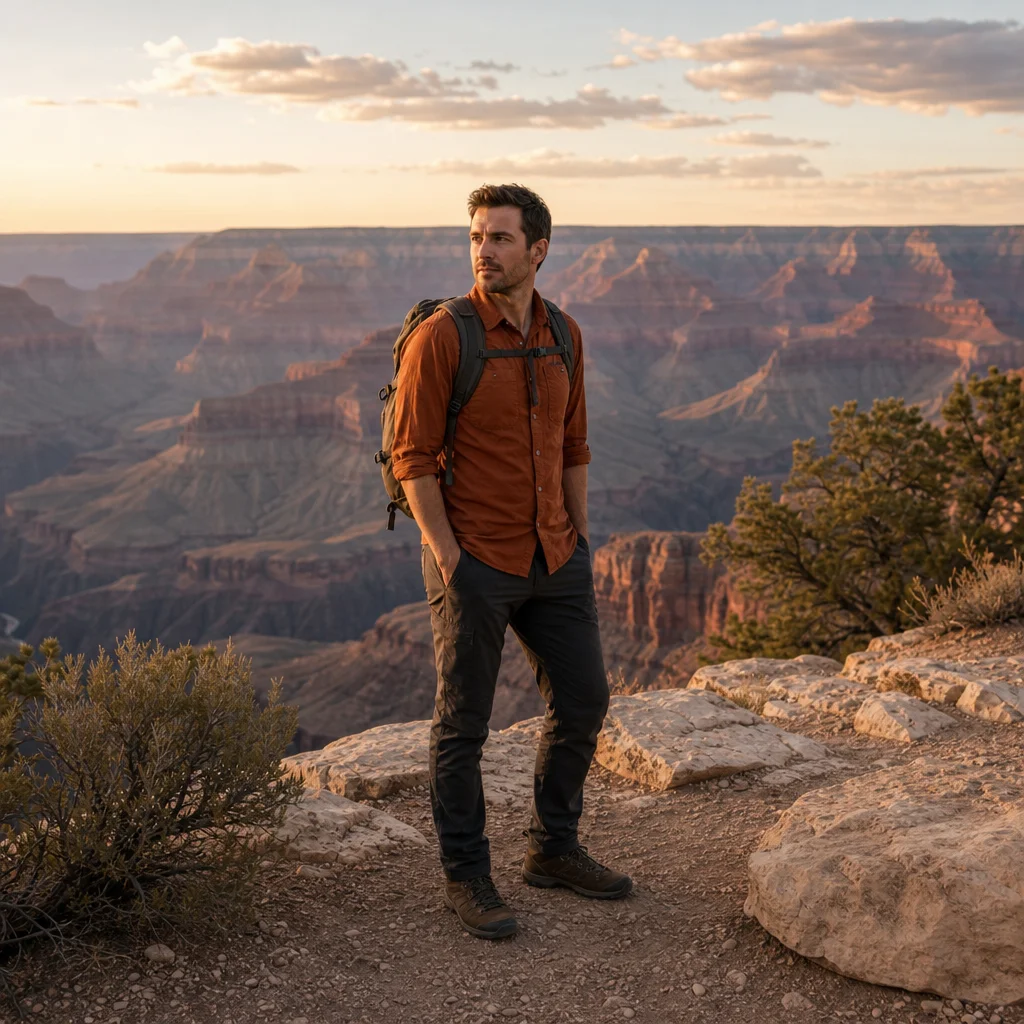
The overlook is still ahead, but the trail has changed. Loose soil slides under each step, damp roots shine across the path, and the daylight you counted on at the trailhead is no longer available in the same way. One person in the group has gone quiet. Another keeps checking the time. The route may be familiar on a map, yet the conditions now demand a different decision.
Turning back at that point isn’t automatically a failure of preparation. It can be the result of paying attention to three moving factors: footing, timing, and group condition. The scenic destination matters, but it’s only one part of the hike’s value. You also have to account for the route out, the effects of fatigue, and how much uncertainty you’re willing to carry.
Preparation: Count the route home
Before you start, separate the hike into more than an outward distance. A trail that leads to an overlook and back may look manageable because the destination is clearly marked, but the return trip can be slower than the approach. Tired legs handle uneven ground less efficiently, and descending often places more stress on balance and knees than climbing does.
Build your time estimate around the full outing:
- Time to reach the overlook
- Time to stop, eat, and look around
- Time to return to the trailhead
- Extra time for slower footing, navigation, or a brief delay
- Enough daylight or visibility for the final section
A late start narrows your options before anything goes wrong. If the trail is dry and your pace is steady, you may reach the viewpoint comfortably. If rain arrives, leaves cover roots, or the group needs more breaks, the same schedule can become unreasonable.
A useful preparation question isn't, “Can we reach the overlook?” It’s, “What time do we need to leave the overlook, and what conditions would make that departure too late?” Decide that before the destination starts pulling everyone forward.
You should also identify natural decision points: a trail junction, a creek crossing, a steep pitch, or a clearly marked distance point. These locations give you places to reassess without waiting for a dramatic problem. A turnaround decision made at a planned checkpoint is usually easier than one made after someone is already exhausted.
Check the route before you leave: Confirm current weather, daylight conditions, trail status, and any local closures or hazards through the relevant land manager or park service. These details can change even when the route description looks familiar.
Observation: Read the surface, not just the map
Maps show direction, distance, and sometimes elevation. They don’t show how your shoe meets the ground today. On a deteriorating trail, footing becomes the most immediate source of information.
Watch for a pattern rather than one isolated slippery spot. A single muddy patch may be easy to step around. Repeated signs deserve more weight:
- Your feet slide slightly on ordinary steps.
- You’re reaching for roots or branches to steady yourself.
- The group is spreading out because everyone needs more concentration.
- Descending a short section feels more difficult than expected.
- Water is running over the trail and hiding the shape of the ground.
- Leaves, mud, or loose gravel conceal where your foot will land.
The important change is often not that the trail becomes technically difficult. It’s that your margin for an ordinary mistake gets smaller. A misstep on firm, level ground may be harmless. The same misstep beside a steep slope, slick root, or rocky drop-off can have more serious consequences.
Slow down when the surface requires it, but don’t assume slower always means safer for the whole outing. A careful pace takes more time. If the slower pace consumes the daylight or energy you needed for the return, it changes the calculation.
Trekking poles can improve balance for some hikers, particularly on wet or loose ground, but they don’t turn unstable terrain into stable terrain. Use them as support and feedback, not as permission to continue past a reasonable limit. Shoes with good traction help, too, but worn tread, unsuitable footwear, or deep mud can still make the route a poor choice.
Action: Compare continuing with turning back
When a group reaches the point of doubt, the decision often gets framed as courage versus caution. That framing isn't useful. The real comparison is between two imperfect options.
Continuing may offer the overlook, a more complete route, and the satisfaction of reaching the planned destination. It may also mean traveling farther on worsening ground, arriving later, and returning when everyone is more tired. If the turnaround point is still ahead, the cost of continuing can grow even while the destination appears close.
Turning back may mean giving up the view for this outing. It also preserves time, energy, and flexibility. You can descend while the group is still capable of paying attention. You may avoid the most difficult section in darkness or during worsening weather. A partial route can provide useful information about the trail without requiring you to test every limitation.
Ask the group questions that produce observations rather than pressure:
- Is anyone already having trouble with balance, breathing, pain, or temperature?
- Has our pace slowed because of the terrain, fatigue, or both?
- What time is it, and how much time remains before our planned turnaround?
- Would the descent be harder than the section we’ve just climbed?
- If conditions worsen again, where would we be when we need to respond?
- Is everyone comfortable continuing, or is someone agreeing simply to avoid disappointing the group?
The last question matters. Group energy isn't a soft or secondary concern. A person who is worried, discouraged, or mentally overloaded may miss a step, forget a layer, or stop communicating clearly. You don’t need unanimous enthusiasm for every mile, but you do need honest participation in the decision.
A quiet group can mean people are concentrating. It can also mean they’re tired and reluctant to speak. Check directly, without making the answer a test: “How are you doing, and what would make continuing uncomfortable?” Give people room to answer without defending their preference.
Changing conditions: Don’t spend your safety margin twice
A route can remain technically passable while becoming a poor choice. This happens when several modest problems combine: wet footing, a late start, slower movement, and a group member whose energy is dropping. None of these needs to be an emergency on its own. Together, they reduce the margin you have for an unexpected delay.
Think of that margin as a resource. You spend it when you continue after your planned pace has slowed. You spend more when the trail becomes harder to read. You spend more when daylight is shorter than expected or when someone needs an unplanned rest. If you use most of it reaching the overlook, you may have very little left for the return.
You can also establish a simple threshold before the group gets tired. For example, turn around if the trail remains slippery through the next decision point, if the group’s pace falls below the time needed to return safely, or if the latest reasonable departure from the overlook has already passed. The exact threshold depends on the route and conditions; the value is deciding it clearly.
Avoid moving the threshold just because the destination feels close. “It’s probably just around the next bend” isn't a reliable planning tool. If you don’t know how far remains, treat the uncertainty as part of the cost.
Weather deserves the same discipline. Rain can affect traction, visibility, temperature, and the pace of every person in the group. Wind can make an exposed viewpoint less comfortable or less secure. A forecast is useful, but the conditions you can observe now should influence the decision as well. You don’t need to wait for a dramatic change before choosing the conservative option.
After the turnaround: Make the partial route count
Once you decide to turn back, make the decision final for that outing. Continuing to debate every few minutes drains attention and can create pressure to reverse course. Tell the group why you’re turning around in specific terms: “The footing is deteriorating, we’re behind the return schedule, and the descent will take longer than planned.”
Then shift from destination mode to return mode:
- Reorganize the group so nobody is isolated.
- Put away anything that interferes with balance or visibility.
- Descend at the pace of the least stable hiker.
- Pause at safe locations, not in exposed or slippery sections.
- Recheck time, weather, and energy at the next planned decision point.
- Continue communicating if conditions change again.
If the route is wet or loose, shorten your steps and place each foot deliberately. Keep your center of gravity controlled rather than rushing to finish. On a descent, a patient pace may feel slow, but it protects the same resources that made the turnaround possible.
The scenic overlook was the original objective. It doesn’t have to be the only useful result. You may learn where the trail becomes difficult, how long the group takes on that surface, and which preparation detail needs improvement next time. If you return with everyone steady, warm enough, and able to discuss the decision calmly, the hike produced a valuable outcome even without the view.
Field-ready decision checklist
Turn back when the combination of conditions leaves too little margin for the route home—not only when the trail becomes impossible.
Before continuing toward a scenic destination, confirm:
- Footing is manageable for the least confident hiker.
- The group has enough energy for both the remaining route and the return.
- You still have a clear time margin for daylight, weather, and delays.
- Everyone is communicating honestly about discomfort or concern.
- The descent won’t be substantially riskier than the climb.
- You know what specific change will trigger a turnaround.
If several answers are uncertain, the partial route is the sounder choice. The overlook will still be there under different conditions; your time, balance, and decision margin are the resources you have to protect today.