Field Notes From a Coastal Hike Planned Around a Narrow Weather Window
I’ll explain how to plan a coastal hike when usable weather may last only a few hours, comparing early starts, route changes, and turnaround choices so you can protect both your margin and your exit.
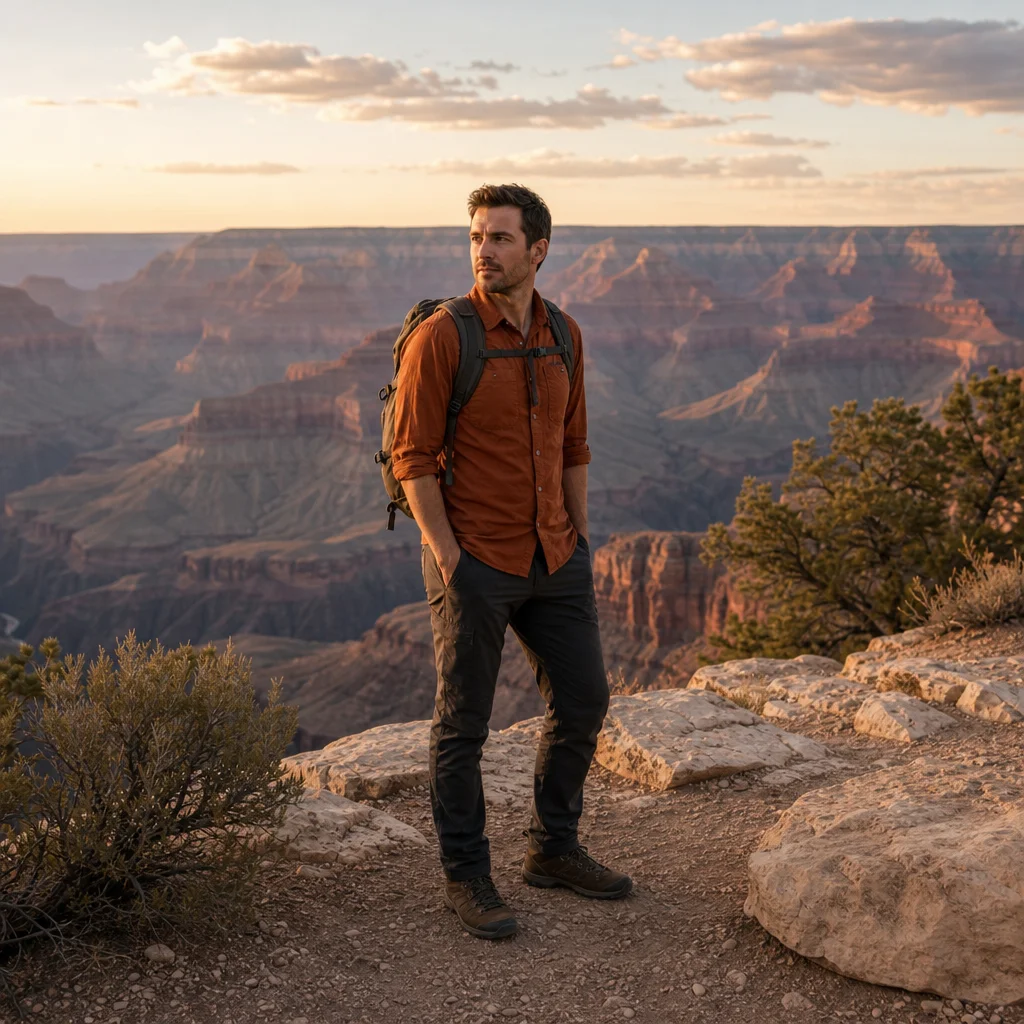
The route looked manageable on paper: a long Atlantic headland, a few exposed sections, limited shelter, and an attractive forecast window between morning rain and an afternoon wind increase. The difficulty wasn't distance alone. Every decision had to account for visibility, footing, tide timing, and how quickly a coastal exit could become less convenient.
These field notes treat the hike as a planning case rather than a personal adventure account. The useful question isn't whether the route can be completed in perfect conditions. It is whether your plan still works when the wind arrives early, the path stays wet, or a viewpoint takes longer than expected.
Preparation: Build the plan around the exit
A narrow weather window changes the order in which you plan. Instead of choosing a route and then checking whether the forecast suits it, start with the conditions that would make the route unacceptable. On an Atlantic coast, those may include strong onshore wind, poor visibility near cliffs, heavy rain that turns paths slick, or a tide that removes an easy return option.
Write down four times before you leave:
- The latest safe departure time.
- The time by which you must reach the most exposed section.
- The turnaround time if conditions or pace deteriorate.
- The time you need to be back at the vehicle, transit stop, or sheltered route.
The final time isn't simply the end of the route. Add time for wet ground, navigation checks, clothing changes, and the possibility that you’ll need to retreat slowly. If the plan only works when every transition is immediate, it has no real margin.
A shorter route with several exit points may be the stronger choice than a longer route with better scenery. That is the central trade-off. A headland traverse can offer a continuous coastal experience, but an out-and-back or loop with inland cutoffs may let you abandon the exposed ground without retracing every difficult section. Under a tight forecast, flexibility is often worth more than distance.
Divide the route into condition-sensitive sections:
- Approach: usually lower consequence, but a late start here consumes the margin needed later.
- Exposed coast: vulnerable to wind, spray, poor visibility, and unstable footing.
- Most committing point: the section farthest from a practical exit or shelter.
- Return corridor: the route you’ll use if the forecast changes or the group slows.
The plan should identify the committing point before you set out. Reaching it isn't an achievement that obliges you to continue. It is a decision point where you reassess the actual conditions rather than the morning’s expectations.
Check the coastal details you’ll rely on: Verify the latest marine and mountain weather, tide tables, access notices, ferry or car-park arrangements, and any local cliff or path restrictions before departure. Forecast timing and official access information can change, and a route that is technically open may still be unsuitable in the conditions you expect.
Observation: Compare the forecast with the ground
A weather window is a prediction, not a switch that turns conditions on and off. At the trailhead, compare what you see and feel with the assumptions behind your plan.
Wind deserves more attention than its average speed. Notice its direction, whether gusts are arriving in pulses, and whether the route will expose you to the wind from the side or front. A moderate breeze in a sheltered approach can feel very different from the same wind on a narrow, wet path above the sea. Gusts can also affect balance when you’re stepping around puddles, using trekking poles, or looking toward a landmark.
Visibility is another early warning sign. Mist that lifts from the lower slopes may not be a problem on an inland woodland trail, but it can hide path junctions, cliff edges, descent lines, and the shape of the coast ahead. If you can no longer identify the next reliable navigation feature, slow down and reassess. Don't treat a familiar-looking line through grass as proof that it is the path.
Footing gives you information about the rest of the day. Wet rock, saturated soil, and deep mud may add only a few minutes to the first section, but they can multiply the time required on repeated climbs and descents. Check the soles of your boots after the first slippery patch. If you are already shortening your stride and using your hands for balance, adjust the schedule before reaching the exposed coast.
Observe your group as well as the landscape. A person who is quiet, rushing, or repeatedly stopping to adjust clothing may be losing comfort or concentration. On a narrow route, the slowest safe pace sets the group pace. Splitting up to preserve a schedule usually creates more risk than it removes, particularly when visibility is worsening.
Action: Choose the least committing option that still works
When the window is narrow, there are usually three workable approaches.
Start early and accept less certainty
An early start gives you more daylight and more time to retreat, but it may place you on the coast before the forecast has resolved. This option works best when the route has frequent exits and the early conditions are easy to evaluate. Its weakness is that low cloud or dawn darkness can make the initial assessment less reliable.
If you choose an early start, make the first exposed section a deliberate checkpoint. Don’t allow the fact that you’ve already begun to turn uncertainty into commitment. If wind or visibility is worse than expected, use the nearest alternative while you still have energy and clear navigation.
Wait for the window and shorten the route
A later start may provide better visibility or drier ground, but it compresses your schedule. The route must be shortened before you leave, not after you’ve spent the available margin. Select a turnaround feature that is easy to recognize and set an absolute time for leaving it.
This approach is suitable when the key attraction is close to an exit or when the route offers a clear inland alternative. It is a poor choice when the most exposed section lies near the far end of a long approach. In that case, you may reach the interesting part just as the weather begins to deteriorate.
Use the protected route and keep the coast optional
An inland track, lower-level path, or shorter loop may sacrifice the most dramatic section while preserving the day. This isn't merely a fallback for bad weather. It can be the most efficient plan when the forecast has a sharp boundary and the cost of being late is high.
Keep the coastal variation optional only if you can return from it without depending on a narrow tide window or a difficult descent. “We can always turn back” is useful only when turning back remains straightforward.
Schedule pressure: Remove decisions before they matter
Time pressure causes predictable mistakes. People walk faster on wet ground, skip food and water stops, postpone clothing changes, and continue past a planned turnaround because the destination appears close. Build those errors into the plan instead of relying on discipline alone.
Set a pace that includes brief checks at junctions and exposed transitions. Stop before the committing section, not in the middle of it, to confirm:
- The group is warm, fed, and moving confidently.
- Visibility still supports navigation.
- Wind isn't making balance or communication unreliable.
- The remaining distance fits inside the return margin.
- The exit you intend to use is still practical.
Make the turnaround rule objective. For example: leave the viewpoint by a specified time, abandon the exposed section if visibility falls below your navigation standard, or return when the wind makes a normally secure stance uncomfortable. A rule based on a visible condition is easier to follow than a vague promise to “keep an eye on it.”
Treat a navigation stop as part of the route, not wasted time. Coastal paths often appear obvious until grass, rock, fog, and multiple informal tracks blur the line. A few minutes spent confirming position can prevent a much longer retreat from the wrong descent.
Changing conditions: Protect the way out first
The first response to worsening weather should preserve your exit, not your objective. If wind strengthens while you’re approaching the exposed ground, turn around before the route becomes difficult. If visibility drops after you reach the far point, avoid exploring for a better view; begin the planned return while you still know where the route leaves the headland.
Rain changes more than comfort. Water can run across slabs, collect on narrow paths, and conceal holes or loose stones. Slow down before the surface becomes obviously hazardous. Trekking poles can help with balance, but they don't make a steep or exposed line safe if you can't place your feet confidently.
If the tide is part of the plan, regard it as a hard constraint. Don't rely on an estimated crossing time or the appearance of a beach at low water. A route that is passable in one direction may become awkward or impossible on the return, especially when waves are reaching farther up the shore. If the tide margin is narrowing, use the higher route or retreat while the alternative remains available.
When a group member becomes cold, tired, injured, or mentally overloaded, simplify the route immediately. Stop for a protected clothing adjustment if one is available. If not, move toward the nearest low-consequence exit rather than trying to recover on exposed ground. A delayed response turns a minor problem into a schedule problem, and a schedule problem into a safety problem.
Communication matters in wind. Agree on hand signals or close-range instructions before the exposed section. Keep the group together at junctions and on difficult ground. If someone can't hear the next instruction, increase spacing only where the route is broad and secure; otherwise, regroup and proceed at a pace that allows reliable contact.
The trade-offs that matter most
The best plan may feel less satisfying because it gives up something visible: the full headland, the furthest viewpoint, or the loop’s final section. In exchange, it protects energy, daylight, and route knowledge for the return.
A waterproof shell may keep rain off, but it can also reduce comfort during a humid climb if ventilation is limited. A fast pace may preserve the forecast window, but it reduces attention on slippery ground. A detailed route plan improves confidence, but it can create overconfidence if you stop comparing the plan with the conditions. Every advantage has a corresponding cost.
Choose the option whose failure mode is manageable. If the early start fails, can you retreat easily? If the later start fails, can you shorten the route without crossing exposed ground? If the coastal variation fails, can you return to shelter before the tide or wind removes that choice? The right answer is the approach that leaves you with useful alternatives after a small error.
Field-ready decision checklist
Before committing to the exposed section, confirm:
- The actual wind and visibility are within your group’s limits.
- The ground is being covered at a pace that includes a safe return.
- The tide and daylight leave a generous margin, not a narrow estimate.
- You know the nearest practical exit and can identify it in current visibility.
- Everyone has the clothing, navigation tools, food, water, and communication method needed for a slower day.
- The turnaround time is still ahead, and the return route remains uncomplicated.
If two or more of those answers are uncertain, choose the shorter or more protected option. A narrow weather window rewards restraint: leave the exposed section while the exit is easy, and treat reaching home comfortably as the day’s primary objective.