How to Handle a Crowded Trail Without Blocking Every Passing Hiker
Crowded trails become safer and more pleasant when you plan stops, keep groups compact, yield deliberately, and control noise. I’ll show you how to make those choices without damaging trail edges or creating a second hazard.
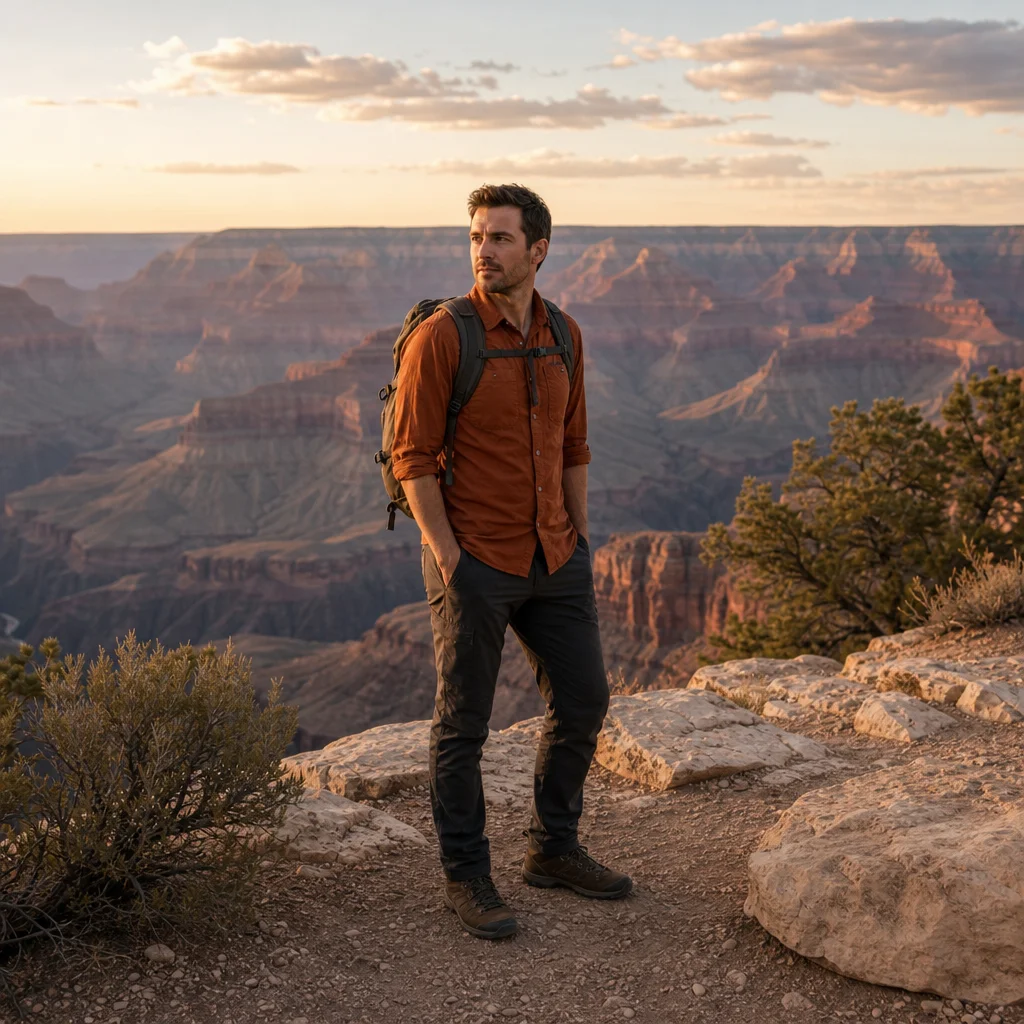
Crowded trails change the decisions you make every few minutes. A narrow path may have hikers approaching from both directions, a family stopped near a viewpoint, and faster walkers trying to pass before the next blind turn. On popular urban and national park routes, courtesy isn't separate from safety: where you stand, how you communicate, and when you stop can determine whether others remain on firm ground or step into traffic, loose soil, or steep edges.
The goal isn’t to move quickly at all times. It’s to keep the trail usable, predictable, and safe for people with different speeds and abilities.
Prepare before the trail narrows
Keep the group easy to manage
Before entering a busy section, bring your group together. Make sure everyone knows the basic plan:
- Walk in a compact single file when the path is narrow.
- Stop only in places where people can pass safely.
- Keep children, dogs, and slower hikers close enough to manage without calling across the trail.
- Avoid spreading across the full width of the path while talking.
- Agree on a simple signal for stopping or moving aside.
A group that occupies the whole trail forces every approaching hiker to negotiate around it. Even if each person moves only a few inches, the combined effect can block a narrow route. Walking in pairs may be comfortable on a wide urban path, but it becomes a moving obstruction when the usable tread narrows.
If your group includes someone who needs frequent rests, plan those rests around known widened areas, benches, overlooks, or clearings rather than waiting until the first person stops from fatigue. You don’t need a perfect map of every stopping point. You do need to notice opportunities before you need one.
Keep essentials accessible
Crowded trails are a poor place to stop and reorganize a pack. Put water, snacks, a phone, and any required medication where you can reach them without emptying your bag. If you’re hiking with children, check layers and footwear before entering a congested section.
Headphones deserve extra attention. If you wear one, keep enough awareness to hear an approaching hiker, a warning, or a change in conditions. On a route shared with cyclists, runners, or maintenance vehicles, full isolation can prevent you from responding in time.
Check the route’s local rules
Before you go, confirm whether the trail has one-way sections, designated passing rules, dog restrictions, timed access, or special crowd-management instructions. Park and municipal guidance can differ, and current conditions may change how a familiar route operates.
Observe the trail before you stop
A safe stopping place has more than a little extra room. Look for a surface that is stable, visible from both directions, and wide enough for others to pass without brushing against your group or stepping off the durable tread.
Good options may include:
- A broad, level shoulder made of rock, gravel, or another durable surface.
- A designated viewpoint or rest area.
- A trail junction where you can stand well clear of every route.
- The inside of a wide bend, provided approaching hikers can see you.
- A widened section with enough room for people moving in both directions.
Poor stopping places include blind corners, the crest of a rise, the bottom of a steep descent, narrow bridges, stairs, switchback turns, and the center of a junction. A group hidden just beyond a bend gives approaching hikers almost no time to react. Someone descending with uncertain footing may need the entire usable width, even if the path looks empty when you stop.
Watch the surface, too. A flat-looking patch beside the trail may be loose, muddy, eroded, or covered with fragile vegetation. Stepping there repeatedly creates a wider informal path and can destabilize the edge. On steep terrain, a narrow strip between the tread and a drop-off may not be a safe place to yield at all.
Read the flow, not just the next person
Before moving aside, scan farther along the trail. If several hikers are approaching in a line, wait until you find a space that can accommodate the whole interaction. Moving aside for one person and then stepping back into the trail as five more arrive creates repeated confusion.
Likewise, if people behind you are moving faster, don’t wait for them to make the first request. Notice their pace and look for the next safe place to yield. A quick, calm acknowledgment—“We’ll pull over ahead”—lets them know you’re aware without requiring a debate while walking.
Act early and communicate clearly
When you need to stop, give others time to understand what you’re doing. Signal your group, move in one direction together, and leave a continuous passage. Don’t scatter several people onto opposite sides of the trail; that can be harder to navigate than a group standing together.
If you’re yielding to an approaching hiker, use a short phrase such as “Please go ahead,” “Passing on your left,” or “We’ll wait here.” Specific language works better than a vague apology. It tells the other person whether you’re stopping, passing, or asking them to choose a side.
Passing another hiker
Passing requires cooperation, especially on a narrow route. The faster hiker should approach slowly enough to avoid startling anyone and should announce their presence before moving around. The person being passed should look for a stable place to step aside, rather than jumping off the trail at the first sound.
If you’re the faster hiker:
- Reduce your speed before you reach the person ahead.
- Give a calm, audible warning with enough distance for them to respond.
- Wait for a visible, sufficiently wide section if the trail is narrow.
- Pass on the side that leaves the safest clearance, not automatically the same side used on a road.
- Thank the person who yielded and return to a safe pace.
If you’re being passed, keep your group together and move only as far as necessary. Check for loose rock, roots, mud, and drop-offs before stepping aside. On a steep or exposed trail, it may be safer for the faster hiker to wait than for you to squeeze onto an unstable edge.
Decide who yields without turning it into a rule dispute
Many hikers follow the courtesy that uphill hikers may be given priority because stopping can interrupt their rhythm or because they may have less visibility of the route ahead. That’s a useful starting point, not a universal command. Conditions matter more than pride or a rigid interpretation.
Yielding may be the better choice when:
- One person is on a narrow, exposed, or unstable section.
- A hiker is already committed to a steep step or technical move.
- A larger group can move aside more efficiently than a single hiker.
- A person has limited mobility or needs extra time to regain balance.
- A trail-specific rule establishes a different priority.
Communicate rather than assuming. “Would you like to come through?” is often enough. If neither direction is clearly safer, the person with the more secure position may wait while the other moves through. The decision should reduce risk and delay, not establish who is technically entitled to the trail.
Manage stops, photos, and regrouping
A photo can block a trail as completely as a large group. Take the picture from a place where you can stand without forcing others to wait. If someone in your group wants a photo, one person can remain clear of the path while the photographer works. Keep tripods, trekking poles, and water bottles out of the passing line.
For a regrouping stop, move everyone fully off the main tread before discussing pace or route choices. A short pause in a safe widening is usually better than a long conversation in the middle of a narrow section. If no safe space appears, keep walking until the trail provides one.
When a group is too large to yield together, divide it temporarily at a safe location. Let other hikers pass, then re-form without leaving stragglers far behind. Avoid shouting names or instructions over long distances; it adds noise and makes it harder for others to hear warnings.
Keep noise proportional to the setting
Crowded trails already carry sound. Loud conversations, speakers, repeated calls, and music played without headphones make it harder to hear approaching hikers and can diminish the experience for everyone nearby. Noise can also cause people to miss a warning about a cyclist, vehicle, falling rock, or unstable surface.
Use a voice that reaches your own group but not the entire slope. Turn off speakers and keep phone calls brief when the trail is congested. If you need to communicate across distance, move closer rather than shouting. A simple hand signal can work for a group that stays within sight.
Noise management also improves your own awareness. Leave enough quiet to notice footsteps behind you, changes in the weather, and signs that the trail is becoming more crowded ahead.
Respond when conditions change
Crowding becomes more difficult when the surface is wet, icy, muddy, dusty, or partially closed. A passing place that was adequate on dry ground may become unsafe after rain. A route that handles two-way traffic in the morning may feel unmanageable after a surge of visitors.
Slow down when visibility drops or when people are bunching near an attraction. If a queue forms, keep it to one side where possible and never extend it around a blind corner. At a closure, washout, or blocked section, follow posted instructions rather than creating a new route through vegetation.
If your group is causing repeated congestion, change the plan. Take a longer break in a designated area, let a large wave of hikers pass, or turn around if the trail no longer allows safe movement. Turning back isn’t a failure of etiquette; it may be the most responsible response to conditions you can’t control.
Field-ready checklist
Before and during a crowded hike, ask yourself:
- Is my group compact enough for the trail width?
- Can everyone reach water and essentials without stopping in the traffic line?
- Is this stopping place visible, stable, and wide enough for others?
- Have I checked both directions before moving aside?
- Can I communicate without shouting?
- Is yielding here safer than insisting on a general right-of-way rule?
- Am I keeping people and gear off fragile or unstable ground?
- Have trail rules, closures, or one-way instructions changed?
If you can’t answer yes to the safety questions, keep moving until you find better ground—or pause the outing. On a crowded trail, the best courtesy is predictable behavior: stay aware, stop out of the way, communicate early, and give others enough room to remain on safe footing.