How to Choose a Safe Desert Start Time When Shade Is Limited
A sunrise start can reduce heat, but it may also create navigation and turnaround problems. I’ll show you how to weigh temperature, shade, water, route length, and escape options before choosing a desert departure time.
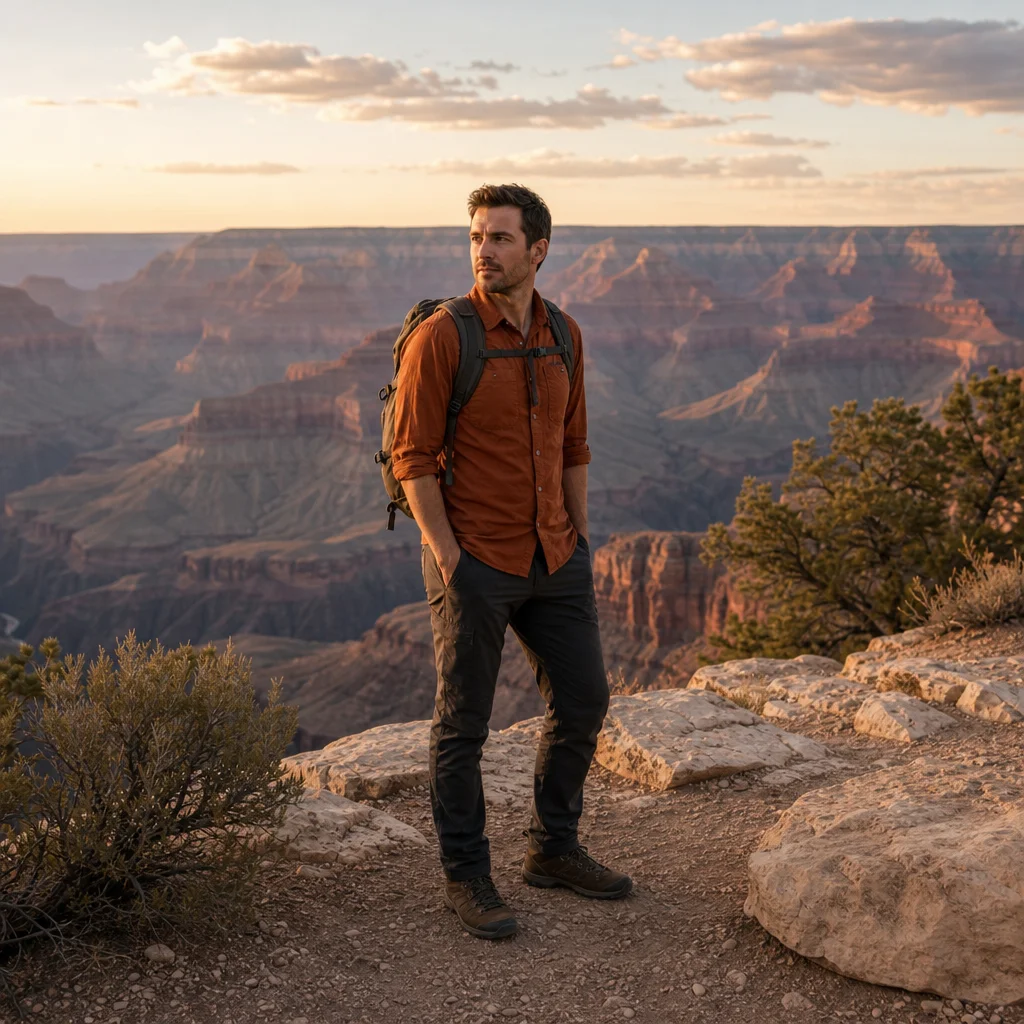
Desert start time isn't just a choice between “cool morning” and “hot afternoon.” On a route with little shade, your departure determines when you reach exposed slopes, how much water you’ll need, whether you can finish before the worst heat, and how much daylight remains if plans change.
For a beginner, the safest decision usually comes from matching the hike to the day’s conditions—not from choosing the earliest possible alarm. A sunrise start can help, but only when you can navigate the opening miles, carry the required equipment, and set a turnaround time you’ll actually follow.
Start with the route, not the clock
Before comparing departure times, break the hike into its heat-relevant parts:
- Exposed climbing: Identify steep sections, slickrock, sandy washes, ridgelines, and broad open slopes with no reliable shade.
- Shade timing: Note where shade exists and when it will reach the route. A shaded start doesn't guarantee a shaded return.
- Water access: Treat every water source on a map as unavailable unless it is confirmed, legally accessible, and safe to use. Many desert routes have none.
- Escape points: Mark junctions, roads, trailheads, lower-elevation routes, and other places where you could shorten the hike.
- Navigation difficulty: Consider whether the route crosses vague terrain that will be harder to follow in darkness or low light.
- Return exposure: Estimate when you’ll be on the most exposed part of the route during the trip back. This is often more important than the temperature at the trailhead.
A short hike with a steep, sun-facing climb can be more demanding than a longer route that stays lower and offers occasional shade. Distance alone is a poor basis for setting a departure time.
Compare the main start-time choices
Sunrise or pre-dawn start
An early start gives you the best chance of completing exposed miles before the day’s heat builds. It can also leave more daylight for the return and create a larger margin before an afternoon storm cycle or other change in conditions.
The trade-offs are significant. You may begin with poor visibility, colder temperatures, or icy sections in winter. Route-finding becomes more difficult where cairns, faint tracks, and junctions are hard to see. You also need a dependable light, spare batteries or a charged backup, and enough familiarity with the route to recognize the correct path.
A pre-dawn departure is a poor choice if you’re using an unfamiliar route with complex navigation, arriving tired, or relying on a trailhead that may be difficult to access safely in darkness. Starting early doesn't compensate for inadequate preparation.
Morning start after first light
Starting after first light often provides a useful middle ground. You gain visibility for navigation while still placing the coolest part of the hike near the beginning. This option works well for a route with a clear trail, a manageable distance, and a return that can be completed before the hottest part of the day.
The question is whether “morning” is early enough for your route. If your first major climb takes two hours and your turnaround point takes another hour, a start that feels early at the trailhead may still put the hardest return miles in peak heat.
Midday or afternoon start
A later start can be reasonable during a cool season, on a short route, or when the hike is primarily a sunset outing with a conservative turnaround. It is usually the least forgiving choice for an exposed desert hike during hot weather.
You’ll need to account for heat during both the outbound and return legs, reduced daylight, and the possibility that you’ll underestimate how slowly you move. A late start also leaves less time to respond to a wrong turn, an injury, a closed road, or a vehicle problem.
If you choose a later departure, make the route shorter than your maximum comfortable distance and set a firm time to turn around—not merely a destination you hope to reach.
Check the day’s limits before setting your alarm: Review the current forecast for the trailhead, the route’s highest and lowest points, overnight and daytime temperatures, wind, humidity, and any heat or thunderstorm alerts. Confirm current trail, road, parking, permit, and closure information with the responsible land manager or park service.
Use turnaround time as the controlling decision
A turnaround time is the point when you stop going farther, even if the destination is close. It protects you from spending all your energy and water on the outbound leg and then discovering that the return is the harder part.
Set it using four factors:
- Expected pace in heat: Your pace may slow sharply on sand, loose rock, steep grades, and exposed terrain. Use a conservative estimate rather than your pace on a mild day.
- Time needed to return: Include breaks, route-finding, water stops, and the possibility of moving carefully over difficult ground.
- Remaining water and energy: You should have enough for the entire return and a reserve for an unexpected delay. Don't plan to arrive at the turnaround point nearly empty.
- Available daylight and temperature: If you’ll be navigating after dark or returning during the hottest period, the turnaround needs to be earlier.
A simple planning test is to ask: If I turn around at this time, can I reach the trailhead with water, daylight, and energy left for a delay? If the answer is uncertain, turn around sooner or choose a shorter route.
For a new desert hiker, the turnaround should be based on conditions and reserves, not on how close the viewpoint appears. A route that takes three hours out may take longer coming back, especially after a hot climb.
Watch for early warning signs
You don’t need to wait for severe symptoms to change the plan. Start adjusting when you notice:
- Your pace has slowed more than expected.
- You’re taking longer breaks but recovering less between them.
- You’re drinking faster than planned or your supply is falling below your return reserve.
- You have a headache, dizziness, nausea, unusual weakness, confusion, or coordination problems.
- You’ve stopped sweating despite feeling overheated.
- Someone in the group is becoming quiet, irritable, disoriented, or reluctant to continue.
- The route is taking longer to follow than expected.
- Clouds, wind, lightning, or a storm are changing the conditions around exposed terrain.
Stop in the safest available location, get out of direct sun when possible, and reassess. Heat illness can become an emergency; confusion, fainting, seizure, loss of coordination, or worsening symptoms require urgent help rather than a normal rest break. Don't leave an impaired person alone while another hiker goes for assistance.
Shade is useful, but it may be temporary or too distant to reach safely. A shallow overhang, the shadow of a cliff, or a small patch beside a rock may not protect you for long as the sun moves. Carry sun protection and plan as if shade will be limited, not guaranteed.
Account for the return, not just the start
Many beginners choose a departure time by imagining the first hour: cool air, good energy, and an easy trail. Instead, picture the final hour. Where will you be? How much water will remain? Will the route be fully exposed? Will you still have enough daylight to recognize the trail and reach the vehicle?
If the return includes a west-facing slope late in the day, a broad sandy wash, or a long climb back to the trailhead, an early start becomes more valuable. If the route descends steeply at the beginning, remember that the return may turn that descent into a hot climb.
Use a route profile or map to identify elevation changes, but don’t assume a lower elevation automatically means safer conditions. Air temperature, reflected heat, wind exposure, humidity, and the surface underfoot all affect how demanding the hike feels.
Build a decision with alternatives
You don’t have to choose between hiking the full route at dawn and canceling the entire outing. Adjust one variable at a time:
- Start earlier and shorten the route if navigation is straightforward.
- Keep the later start but choose a lower, shorter route with reliable escape points.
- Hike to a shaded or cooler objective rather than an exposed summit.
- Move the outing to a cooler day or season.
- Use a dawn-to-morning plan and leave the exposed section before temperatures rise.
- Turn the hike into an out-and-back with a clearly defined distance limit instead of committing to a loop.
A route with limited shade rewards conservative planning. The best start time is the one that leaves you with options after the first unexpected delay.
Field-ready start-time checklist
Before leaving, confirm:
- The forecast is suitable for the route, not just the nearest town.
- You know when the route’s exposed sections will be in direct sun.
- You’ve chosen a departure time that allows a daylight return.
- Your turnaround time is written down or shared with the group.
- You have enough water for the planned hike, a reserve, and a delay.
- Everyone has sun protection, food, navigation, a light, and suitable footwear.
- Trailhead access, closures, permits, and emergency contacts are current.
- You’ve identified a shorter alternative and a point where you’ll abandon the original plan.
If the hike will place you in the most exposed terrain during the day’s hottest conditions, if your water reserve is uncertain, or if a delay would leave you without daylight or a safe exit, the departure time isn't the main problem. Choose a shorter route, a cooler day, or no-go conditions.