Choosing a Hike When You Have Only Two Hours of Daylight
A short outing can be safer than a longer one if you protect your turnaround margin and access time. I’ll show you how to compare routes, daylight, trail conditions, and exit options before committing to a late-season hike.
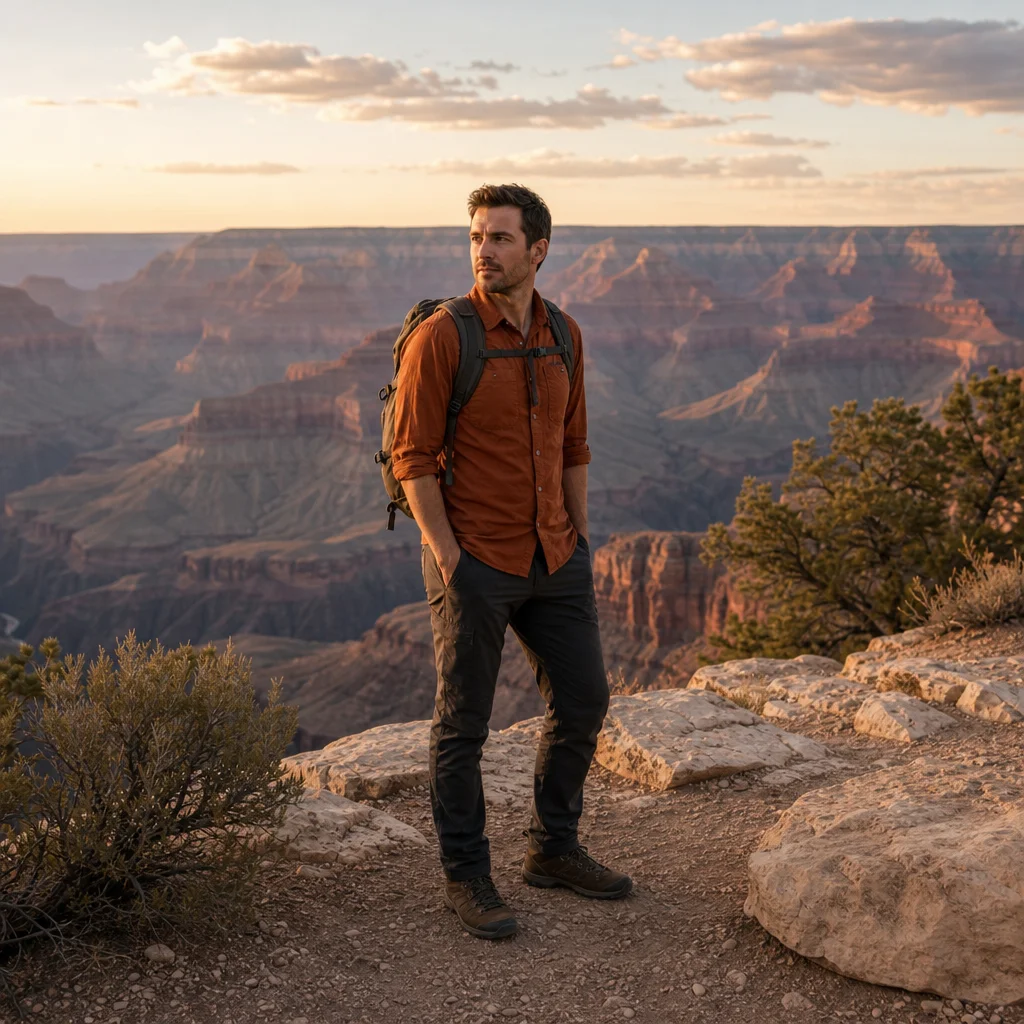
Two hours of daylight can disappear quickly when the trailhead is unfamiliar, the ground is wet, or the route climbs more slowly than expected. The mistake is treating those two hours as hiking time. They also have to cover finding the trail, reaching the point where you turn around, returning to the car, and handling a minor delay.
For a short winter or late-season outing, choose the hike by its turnaround plan, not by the route’s advertised distance. A modest trail with easy access, clear navigation, and several points to turn back is often a better choice than a scenic route that requires a long approach or a fixed commitment.
Start with usable daylight, not sunset
Find the day’s local sunset time, then subtract the amount of light you need for the return. That return margin should account for your pace, terrain, and the consequences of arriving late—not just the time shown on a map.
A useful starting calculation is:
usable hiking time = time until sunset - return-light margin - access and setup time
If sunset is at 5:00 p.m., that doesn't mean you have until 5:00 to begin walking back. You may want to be at the turnaround by 3:30 or 4:00, depending on the route. A forested trail, canyon, north-facing slope, or cloudy ridge can become dim well before the official sunset time. Snow, ice, and wet leaves can also slow your descent after the light begins to fade.
For beginners, a conservative return-light margin is more useful than an optimistic pace estimate. You can adjust it for a familiar, flat trail, but avoid treating your fastest possible pace as the plan. The route should still work if you stop to check the map, adjust a layer, or let another hiker pass.
Confirm the evening window: Check the local sunset time, civil twilight, forecast, and any access restrictions for the exact trailhead on the date you plan to go. A park’s gate schedule or seasonal closure can change the usable time more than the route distance does.
Choose the right kind of route
With only two hours of daylight, look for a route that gives you control. The best options usually have several of these features:
- A trailhead close to your starting point
- A short, predictable approach from the parking area
- A well-marked route with limited navigation complexity
- Moderate terrain that doesn't require scrambling or careful footwork
- Frequent turnaround points, such as overlooks, bridges, junctions, or clear trail features
- A broad path where slowing down doesn't create a safety problem
- An easy return using the same route
- Reliable phone reception or a clearly understood offline map, where available
An out-and-back is often easier to manage than a loop because you can reverse course at any moment. A loop may look efficient on a map, but it can create pressure to finish a specific section before you can return to the trailhead. If one part of the loop is confusing, exposed, steep, or poorly maintained, you may discover the problem after spending most of your available light.
A short loop can still work when the route is familiar, well marked, and close to the trailhead. For an unfamiliar late-season hike, however, a simple out-and-back usually offers the cleaner decision: continue while conditions are good, then turn around without needing to complete the route.
Measure the route in time and difficulty
Trail mileage is only one part of the calculation. A two-mile path can take longer than a four-mile path if it is steep, rocky, muddy, icy, or difficult to follow. Online route descriptions may also report the distance from the parking area to the destination without making the access conditions clear.
Estimate the outing in separate parts:
- Trailhead setup: parking, finding the start, organizing layers, and checking navigation.
- Approach: any walk from the vehicle to the actual trail.
- Outbound travel: the time to reach your planned turnaround point.
- Return travel: the time required to get back, using a slower pace if the surface is deteriorating.
- Contingency: time for a wrong turn, a brief rest, a gear problem, or another small delay.
The return estimate deserves special attention. Going downhill isn't always faster. Ice, loose rock, slippery leaves, and fading light may require shorter steps and more deliberate footing. If you expect the return to take 45 minutes in good conditions, don't schedule it as though it will take 30 minutes because you are heading downhill.
For a casual outing, it is better to select a destination you can reach well before the deadline than to aim for the farthest point on the map. You can always continue if you arrive early and conditions are stable. You can't recover lost daylight by walking faster without increasing the chance of a fall or navigation error.
Prevent the common planning mistakes
Mistake: counting only the walk to the destination
A listed distance may describe one direction, while the available daylight applies to the entire outing. Double the one-way distance for an out-and-back, then add setup and access time. If the route description gives an estimated total time, treat it as a starting point rather than a guarantee.
Mistake: using the trailhead’s sunset time without checking the terrain
Sunset isn't equally useful everywhere. Tall trees, steep valleys, cliffs, and nearby ridges can block direct light. A route that is open and bright at the parking area may be dark under a dense canopy. Plan to finish the more technical sections while you still have a comfortable amount of light.
Mistake: ignoring the drive home
The hike doesn't end when you reach the car. You may need time to change wet layers, clear fog or frost from the windshield, and drive on roads that become slick after dark. If the trailhead requires a rough road, allow additional time to leave safely rather than using every minute on the trail.
Mistake: assuming a headlamp solves the schedule
A headlamp is an important backup, but it doesn't make every route suitable after dark. Darkness changes how you judge footing, landmarks, weather, and other hazards. On an unfamiliar trail, the headlamp should protect you from an unexpected delay—not justify choosing a route that already depends on night travel.
Mistake: making the destination the only goal
A viewpoint, summit, waterfall, or landmark can create pressure to continue after the conditions have changed. Pick an intermediate feature that still makes the outing worthwhile: a junction, bench, bridge, overlook, or shaded clearing. A hike with several acceptable stopping points is easier to manage than one that feels unsuccessful unless you reach the end.
Set the turnaround before you start
Write down a turnaround time before leaving the trailhead. Base it on the time needed to return to the car with your planned light margin, not on how far you hope to travel.
For example, you might decide:
- Start walking at 2:00 p.m.
- Reach the planned destination or turn around by 3:00 p.m.
- Begin the return earlier if the trail is icy, confusing, or slower than expected
- Arrive back at the trailhead by 4:00 p.m.
- Keep additional time for getting organized and leaving the area safely
The exact times will vary with the season, location, and route. The important feature is that the return decision is made before you are tired or emotionally committed to the destination.
Use fixed points to check your plan. If you expected to reach a junction in 20 minutes but need 35, don't simply move the whole schedule later. Recalculate the return. A slow start may indicate mud, ice, poor navigation, or a pace that will continue throughout the route.
Turn around early when:
- The trail surface is becoming difficult to manage
- You have already missed a planned time check
- The route is less obvious than expected
- Clouds, wind, rain, or snow are reducing visibility
- Someone in the group is cold, tired, or moving unsteadily
- You are relying on a phone battery, map, or light source that may not last
- You would need to hurry to return before your chosen cutoff
Turning around isn't a failed hike. It is the action that keeps a short outing from becoming a late, stressful recovery problem.
Check access and conditions on the day
Late-season routes can change faster than their descriptions. A road may be gated, a parking area may have a seasonal restriction, or a bridge may be closed. Recent reports can help you identify changes, but old reports shouldn't be treated as current conditions.
Check the official land manager or local authority for access rules, closures, permits, parking requirements, and seasonal hazards. Then compare that information with a recent forecast for the trail’s elevation and aspect. Wind, freezing temperatures, precipitation, and early darkness may matter more than the distance.
Bring a charged phone with an offline map, a headlamp with adequate battery, warm and weather-resistant layers, water, and a small amount of food. For an unfamiliar route, tell someone where you are going and when you expect to return. These preparations should support a conservative plan, not expand it.
A simple go-or-no-go test
Choose the hike only if you can answer yes to all four questions:
- Can you reach the trailhead, start walking, and return without depending on a perfect schedule?
- Do you have a clear turnaround time and a route that allows you to reverse course easily?
- Can you navigate and manage the expected surface conditions with the equipment you have?
- If you are delayed, can you safely reach the car without rushing or relying on unfamiliar night travel?
If any answer is no, shorten the route, choose a lower-risk trail, or postpone the outing. Two hours of daylight is enough for a worthwhile hike when the plan leaves room for changing conditions. The right route is the one that gives you time to observe, decide, and return before the margin disappears.
Field-ready checklist
- Check sunset, twilight, forecast, and access status.
- Subtract setup, approach, return, and contingency time from the daylight window.
- Prefer a familiar out-and-back with clear turnaround points.
- Estimate time from terrain and conditions, not mileage alone.
- Set the turnaround before starting and keep it fixed.
- Carry navigation, a headlamp, suitable layers, water, and food.
- Turn back when the route requires rushing, guessing, or using up your safety margin.