How to Decide Between a Sunrise Hike and a Cooler Evening Hike
I'll help you compare sunrise and cooler evening hikes by weighing heat, visibility, wildlife activity, transportation, darkness, and turnaround time so you can choose a warm-weather outing with a sensible margin for changing conditions.
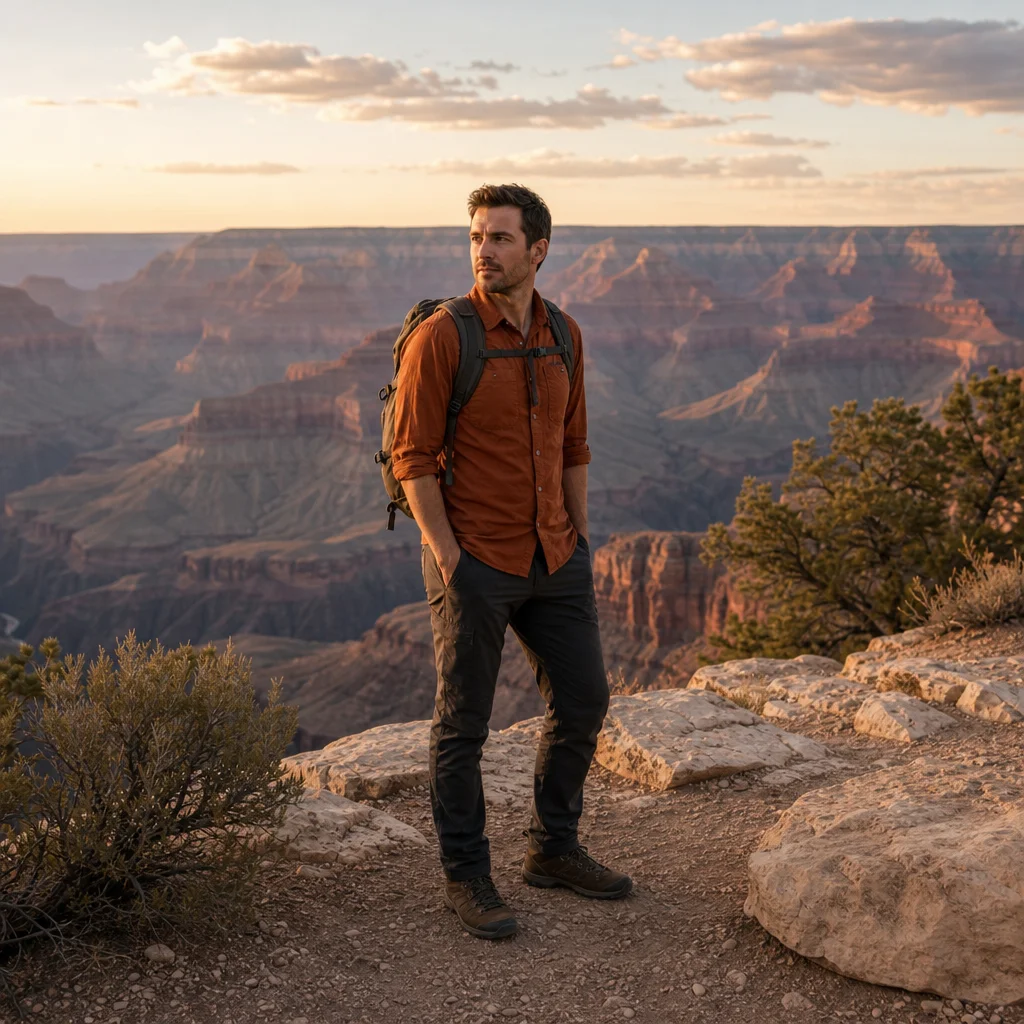
When a warm, dry trail is already hot by midmorning, the timing of your hike becomes part of your safety plan. A sunrise start usually gives you the widest daylight margin and the lowest temperatures. An evening hike may be more comfortable after the heat breaks, but it asks you to manage fading light, transportation, and a narrower turnaround window.
Neither option is automatically better. Your choice should depend on the route, the forecast, how quickly you move, and what happens if you need to stop or turn around. For a beginner, the most reliable decision is the one that leaves enough time and visibility to finish without rushing.
Start with the route, not the clock
Before comparing sunrise and evening, look at the trail's shape and logistics.
A short, familiar loop near town can work well in the evening because you have several easy exit points and help is usually closer. A longer route, a canyon, a trail with confusing junctions, or a path with steep drop-offs generally favors sunrise. Starting early gives you more daylight to navigate, more time to respond to a slower pace, and more options if heat or fatigue changes your plan.
Consider these route questions:
- Is the trail easy to follow in low light, or does it cross open rock, washes, or unmarked junctions?
- Are there exposed slopes with little shade?
- Does the route have a reliable turnaround point before the most difficult section?
- Will you return to the trailhead before the gate, shuttle, or transit service closes?
- Is cell coverage inconsistent, making a late problem harder to manage?
- Would a minor injury or wrong turn leave you waiting in darkness?
A route that is comfortable at 7 p.m. on a smooth urban path can become a different outing at 8:30 p.m. on loose, rocky terrain.
Compare the heat and your energy
Sunrise usually offers the strongest heat advantage. Air temperatures are often near their daily low around the early morning, although the exact pattern depends on the forecast, elevation, wind, and local terrain. You may also travel before the trail surface has absorbed the day's heat.
That doesn't make every sunrise hike cool. An exposed route can heat up quickly after the sun clears the horizon, and a warm overnight forecast may leave little relief. If you choose sunrise, carry enough water for the full outing rather than assuming the early start removes the need for it. Dry air can increase fluid loss without making you feel as sweaty as you would in humid conditions.
Evening hikes can be a good alternative when the route remains hot at dawn or when you function poorly after an early start. The temperature may drop noticeably once the sun is low, but shaded rock, pavement, and canyon walls can hold heat well into the evening. Check the actual forecast for the hours you will be on the trail instead of relying on a general daily high.
Your pace matters, too. If you expect to move slowly, stop often for navigation, or take a long break at the destination, the cooler part of an evening hike may disappear before you finish. A sunrise outing gives you more room for that slower pace.
Judge visibility in two different ways
Sunrise and evening light create different navigation problems.
Before sunrise, you begin in darkness and gradually gain light. The first section may be the least familiar visually, even if you know the trail. A headlamp is more useful than a phone flashlight because it leaves both hands available and provides steadier light. Carry a backup light, keep it accessible, and check that both lights have enough charge or battery life for the planned outing.
At sunrise, glare can become an issue once the sun is low on the horizon. A forward-facing trail may be bright but hard to read, while a route facing into the sun can hide rocks, steps, or markers. Sunglasses and a brimmed hat can help after daylight arrives.
In the evening, you begin with good visibility and finish with less. That can make the hike feel straightforward until the return journey becomes the harder part. Shadows lengthen across uneven ground, trail markers become difficult to distinguish, and familiar landmarks can look unfamiliar. Allow more time for the final section than you would in full daylight.
If you aren't comfortable walking with a headlamp, an evening hike should end well before you need one. Carrying a light isn't the same as being ready to use it; practice adjusting it and walking with it before relying on it on an unfamiliar route.
Check the route’s current limits: Before choosing a start time, confirm the latest trail closure, permit or parking requirement, fire restriction, gate or shuttle schedule, sunrise and sunset times, weather alert, and local wildlife notice. These details can change by season or by day.
Consider wildlife without guessing
Wildlife activity varies by species, season, water availability, temperature, and human traffic. Dawn and dusk can both be active periods, so don't treat either time as automatically wildlife-free.
At sunrise, animals may still be moving after the night, particularly on quieter routes. In the evening, they may become active as temperatures fall. Water sources, dense vegetation, shaded drainages, and trail edges deserve extra attention at either time. Slow down near blind corners, avoid surprising animals, and give them space to move away.
Keep food and scented items secured, follow local rules about dogs, and don't approach or feed wildlife. If the route has a current wildlife advisory, let that information outweigh a general preference for sunrise or evening. A trail with frequent encounters at dusk may be a poor choice for an evening outing even if the temperature is ideal.
Your behavior also affects visibility. A headlamp can help you see, but shining it directly at an animal may startle it. Use a lower setting when appropriate, keep your distance, and be prepared to turn around if the trail ahead is occupied or visibility is poor.
Protect your transportation margin
Transportation is one of the clearest differences between the two choices.
A sunrise hike may require driving before traffic, walking through a dark parking area, or meeting a partner at an unusually early hour. Check that the trailhead is open at your intended arrival time and that you can park legally. A remote trailhead may feel empty and isolated before sunrise, so consider whether you are comfortable preparing there alone.
An evening hike may be easier to reach but harder to leave. Parking areas can close at a fixed time, public transportation may stop running, and rideshare availability can be less predictable outside town. A vehicle left at a trailhead after dark can also create a security concern, depending on the location.
Write down the actual departure deadline, not just the planned hiking time. If the gate closes at 9 p.m., you need to be back at the vehicle before 9 p.m., not arriving at the trailhead at that moment. Add time for changing shoes, organizing gear, and walking from the trail to the parking area.
Build a turnaround margin
A good turnaround time accounts for the least comfortable part of the outing, not just the distance to your destination.
For a sunrise hike, decide whether you need to turn around before temperatures rise, before your water supply reaches a certain point, or before a planned appointment. For an evening hike, turn around based on the time needed to return in fading light. Don't use the outward pace as your only estimate; fatigue, darkness, and rough terrain can slow the return.
A simple method is to set three limits before leaving:
- Time limit: the latest time you will begin the return.
- Resource limit: the minimum water, battery, or daylight margin you will keep in reserve.
- Condition limit: the change that ends the hike, such as rising heat, smoke, wind, confusion about the route, or unusual wildlife activity.
Turn around when the first limit is reached. This prevents a comfortable beginning from persuading you to continue after the plan has become tight.
Choose the better option for common situations
Choose sunrise when:
- The route is long, exposed, remote, or difficult to navigate.
- You want the largest daylight and turnaround margin.
- The forecast shows a rapid rise in temperature after morning.
- Transportation and trailhead access are reliable before dawn.
- You can start rested and are comfortable using a headlamp.
Choose evening when:
- The route is short, familiar, and easy to leave from several points.
- You can finish before darkness or are fully prepared to hike after sunset.
- The evening forecast is meaningfully cooler rather than merely less sunny.
- The trailhead, parking, and return transportation remain available.
- You prefer a later start and can protect enough time for the return.
Choose neither when:
- Heat, wind, smoke, or storm conditions remain unsafe during both time windows.
- You don't have enough water, lighting, navigation tools, or communication options.
- The route's access rules conflict with your available schedule.
- You would need to rush to finish before darkness, closing time, or extreme heat.
A shorter trail at a safer time is usually a better beginner outing than a longer trail squeezed into a narrow weather window. You can also test the decision with a low-consequence route: choose a well-marked loop near home, finish with plenty of daylight, and learn how your pace and energy change in that time slot.
Field-ready decision checklist
Before committing, ask:
- What will the temperature, wind, smoke, and visibility be during the entire hike?
- How much daylight will remain when you reach the turnaround point?
- Can you navigate and return if the trail takes longer than expected?
- Is the trailhead open, and will your transportation still be available afterward?
- What wildlife or access notices apply today?
- Do you have sufficient water, a charged phone, navigation, and a reliable light?
- What specific condition will make you turn around?
Choose sunrise when daylight and heat control are your main concerns. Choose evening when the route is simple, the return logistics are confirmed, and you have a generous darkness margin. If either option leaves you depending on perfect weather, perfect navigation, or perfect timing, change the route or postpone the hike. in a warm, dry region, a conservative schedule is often the feature that makes the outing workable.