The Six Questions to Answer Before Hiking a Trail in a National Park
A practical six-question checklist for preparing to hike in a U.S. national park, covering permits, reservations, closures, transportation, wildlife rules, weather, and emergency communication.
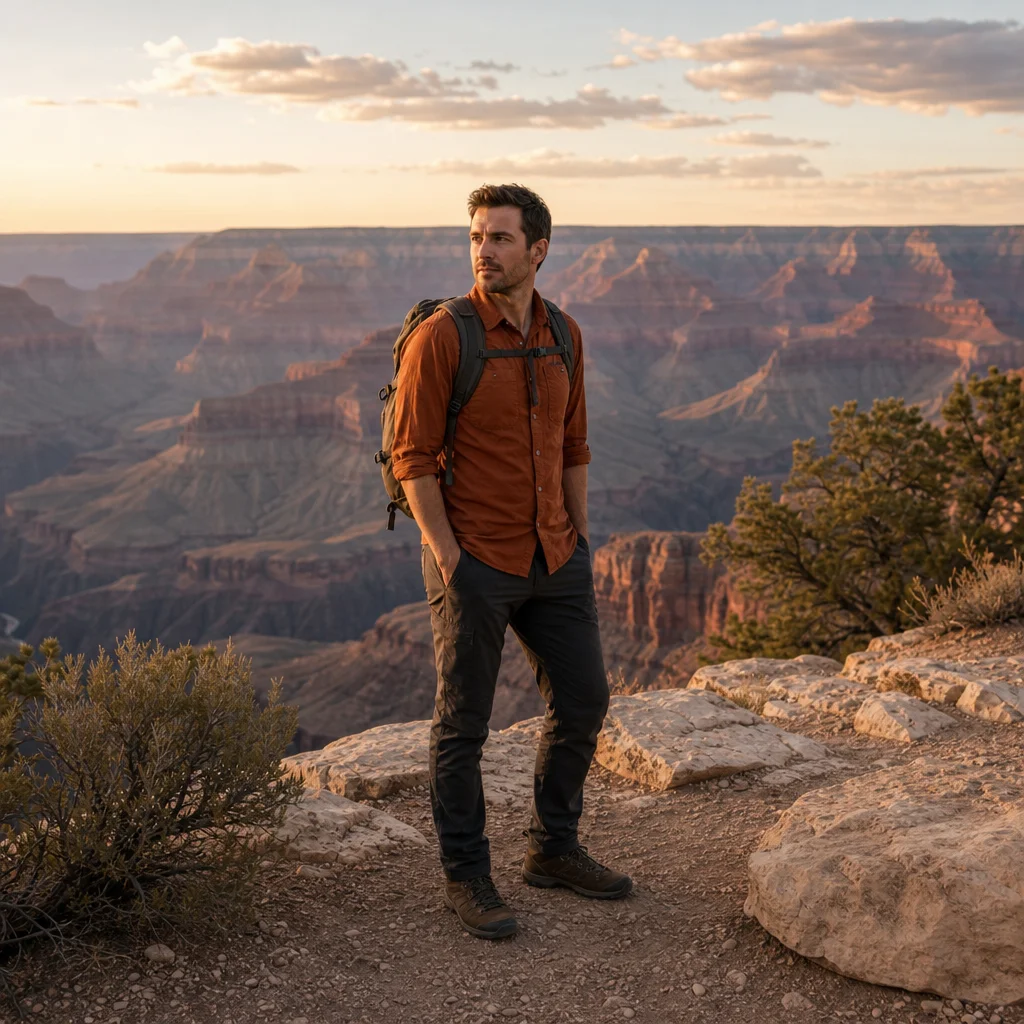
A trail can look straightforward on the map and still require more planning than a day hike closer to home. In a national park, a short route may involve a timed entry reservation, a trailhead shuttle, seasonal closures, limited cell service, or wildlife rules that change how you carry and store food. The main trade-off is simple: a few minutes of research can limit your flexibility, but skipping that research can end your hike before it starts—or create a difficult situation several miles in.
Before you leave, answer these six questions.
1. Do you need a permit, reservation, or timed entry?
Not every national park trail requires advance paperwork, but some do. Requirements may apply to the park itself, a specific trailhead, an overnight route, a popular scenic area, or a particular time of day. A permit may also be required for activities such as backcountry camping, climbing, boating, or collecting firewood.
Separate the questions that are easy to combine:
- Do you need permission to enter the park?
- Do you need a reservation for the road, shuttle, parking area, or trailhead?
- Do you need a hiking or wilderness permit?
- Is your permit valid for the date, start time, group size, and route you selected?
- Do you need to carry proof of the reservation or permit?
A reservation can give you a guaranteed place while reducing spontaneity. Arriving without one may preserve flexibility, but it can leave you unable to access the trailhead if demand is high. For a short hike with several possible routes, that trade-off may favor flexibility. For a long drive or a hike with a fixed start point, securing the required reservation is usually the safer planning choice.
Confirm your access window: Check the park’s official website for the current permit, reservation, timed-entry, and identification requirements before you drive. Save the confirmation where you can access it without a signal.
2. Is the trail—and the route to it—open?
A trail’s name on a map doesn’t guarantee that you can reach it. Closures may affect the footpath, a bridge, a road, a parking area, or an entire district of the park. Snow, flooding, rockfall, wildfire activity, construction, fallen trees, or resource protection can change access after you’ve made your plan.
Check the status of both the trail and the approach. A route may be open in principle while its normal trailhead is inaccessible. You may need to use another entrance, walk a longer approach, or choose a different hike altogether.
Look for details rather than relying on a single label such as “open.” Ask:
- Is the full route open, or only part of it?
- Are there detours or temporary restrictions?
- Is the trailhead road open to private vehicles?
- Is parking available at the time you plan to arrive?
- Are shuttle services operating on your hiking date?
- Do current conditions make the posted distance or difficulty misleading?
Keep at least one backup route in mind. The best backup is nearby, within your ability, and compatible with the same transportation and weather plan. A second trail on the opposite side of a large park may not be a practical alternative if reaching it takes several hours.
Check the route twice: Review the park’s current alerts shortly before departure, then confirm the trailhead status when you arrive. Don’t treat an old map, recent social media post, or an unverified trail report as proof that the route is open.
3. How will you get to the trailhead, and how will you get back?
Transportation often determines whether a hike is realistic. A trail may be only a few miles long, but the parking area can fill early, the access road may be narrow, or a shuttle may run on a schedule that doesn’t match your pace.
Build your plan around the entire movement of the day:
- Where will you park?
- Is parking allowed overnight or only during certain hours?
- Can you take a private vehicle to the trailhead?
- If you use a shuttle, where does it pick up and drop off?
- What’s the last return departure?
- Does the route require a second vehicle or a road walk at the end?
- How much time do you need for waiting, transfers, and finding parking?
Driving directly to a trailhead gives you more control over departure time, but it can involve limited parking, rough roads, or a long walk from an overflow lot. A shuttle can reduce driving and parking stress, but it introduces a schedule. If missing the final return trip would leave you stranded, treat that departure as a firm turnaround point rather than a suggestion.
For a first visit, add more time than the driving directions indicate. Park roads may be congested, slow, or subject to delays that don’t appear in ordinary navigation apps. Download directions and trail information in advance, and note where you’ll leave the vehicle if the phone loses service.
4. What wildlife rules apply to this hike?
Wildlife guidance is specific to the park, the species, and sometimes the season. Rules may cover food storage, trash, pets, fishing, camping, approaching animals, or the use of bear-resistant containers. Even when a rule isn’t required for your exact trail, the park’s guidance gives you a safer way to behave around animals.
Plan for food and scented items before you reach the trailhead. Depending on the park, that may mean keeping supplies in a vehicle, using a designated storage locker, carrying an approved container, or securing items according to posted requirements. Don’t assume that a sealed food wrapper is harmless. Snacks, toiletries, sunscreen, and cooking equipment can all matter in areas where animals associate people with food.
Your response to wildlife should be based on distance and behavior, not on getting a better photograph. Don’t approach, feed, surround, or block an animal’s path. Keep your group together, control your dog where pets are permitted, and give animals a way to move away. If you encounter wildlife at close range, follow the park’s species-specific instructions rather than improvising.
Review the wildlife rules for this park: Before packing food and gear, read the current guidance for the species and trail area you’ll visit. Check whether dogs, food storage, bear-resistant containers, or seasonal restrictions apply.
5. What weather and conditions could change the hike?
A forecast for the park entrance may not describe conditions at your trailhead. Elevation, exposure, shade, wind, and distance from roads can produce a very different day on the trail. A warm morning can become a cold, wet, or dangerous afternoon, especially on exposed routes or during shoulder seasons.
Check the forecast for the hiking area and the expected start and finish times. Then consider how conditions affect the route itself:
- Will heat increase water needs or make a late return risky?
- Could rain create flash-flood danger, slippery rock, or poor visibility?
- Could snow or ice make a trail more technical than its rating suggests?
- Will wind make exposed ridges unsafe?
- Could thunderstorms develop while you’re above tree line?
- Are wildfire smoke, air quality, or extreme temperatures a concern?
Your clothing and equipment should match the least comfortable likely condition, not the most pleasant forecast. Carry a warm layer and rain protection when conditions are changeable. Use sun protection and bring enough water for the route, with a margin for delays. A filter or treatment method may help where water sources are available, but don’t assume every creek or spring is safe to drink without treatment.
Set a turnaround time before you start. Base it on daylight, weather, transportation, and the slowest person in your group. If conditions worsen, the trail becomes difficult to follow, or you’re using more time or water than expected, turn around while you still have options.
Make the weather decision close to departure: Compare the current forecast, park alerts, and any relevant hazard information with your route and turnaround time. If the conditions exceed your experience or equipment, choose the backup hike—or don’t go.
6. How will you communicate if something goes wrong?
Cell service is uneven in national parks. You may have a signal at the entrance and none at the trailhead or in a canyon. A communication plan should work even when you can’t call for help immediately.
Tell a reliable person where you’re going, which route you expect to take, when you’ll start, and when you plan to return. Include your backup route and vehicle information. Agree on when they should act if you don’t check in, and make sure they know how to contact the appropriate park or local emergency service rather than simply waiting for a message.
Carry a charged phone, but treat it as one tool rather than your entire safety system. Download maps for offline use, carry a paper map when the route warrants it, and bring a way to navigate if the trail is poorly marked. For remote trips, consider whether a satellite messenger or personal locator beacon fits the route, group, and consequences of losing contact. Learn how the device works before you need it; an emergency device that’s packed away, uncharged, or unfamiliar offers limited help.
Know the park’s emergency contact process and your location as precisely as possible. Trail names, junctions, mileage, landmarks, elevation, and coordinates can all help rescuers. If someone is injured, keep the group together when possible, protect the person from exposure, and avoid creating a second emergency by sending an unprepared hiker for help.
A field-ready go or no-go check
Before leaving, you should be able to answer all six questions without guessing:
- Access: Do you have every required permit, reservation, and entry detail?
- Status: Is the trail, road, parking area, and any shuttle currently operating?
- Transport: Can you reach the trailhead and return before the final cutoff?
- Wildlife: Do you know the current rules for food, pets, and animal encounters?
- Conditions: Are the forecast, daylight, water, and your equipment compatible?
- Communication: Does someone know your plan, and can you navigate or call for help if service fails?
If one answer is uncertain, pause and resolve it before starting. If you can’t resolve it, choose the backup route or postpone the hike. Flexibility is useful, but only after you’ve confirmed that the basic access, conditions, and return plan are sound.