Trail Etiquette When a Faster Group Catches You on a Narrow Ridge
I’ll explain how to handle a faster group approaching on a narrow ridge, from the first call-out to the safest passing point. You’ll learn how to protect exposed terrain, communicate without pressure, and keep a brief delay from becoming a risky maneuver.
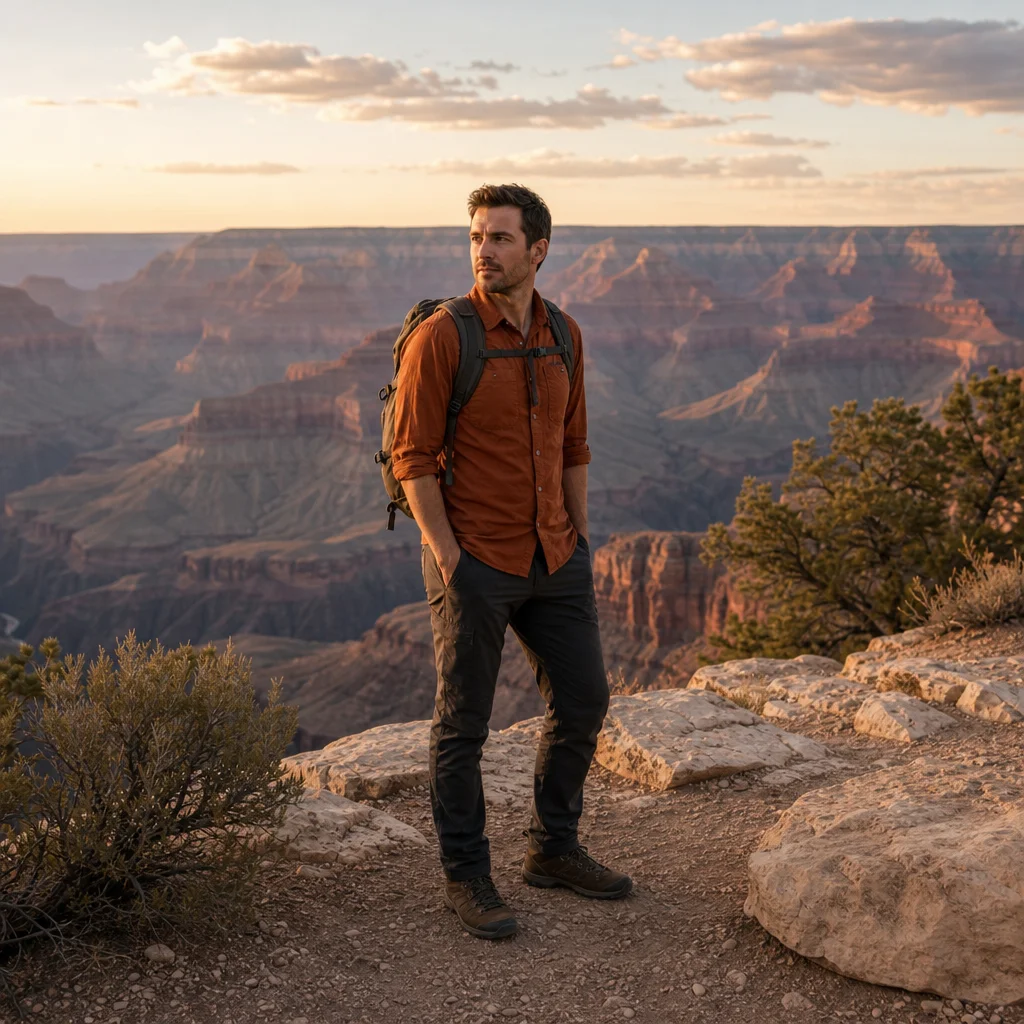
A faster group calling from behind can make a narrow ridge feel suddenly smaller. With exposure on one side, loose rock underfoot, or nowhere to stand without damaging vegetation, the correct response isn’t simply to step aside. You need to communicate early, read the terrain ahead, and choose the least risky place for both groups to pass.
The goal is more than courtesy. Every rushed step widens a social trail, loosens soil, or puts someone near an edge they didn’t need to approach. Good trail etiquette on a ridge is a form of long-term maintenance: you preserve the route for the next group while preventing a minor delay from becoming a fall or a conflict.
Prepare before the approach
Before you start across a narrow ridge, set an expectation with your group. Keep everyone close enough to hear a call from behind, and agree that the group will move to a safe passing point rather than scattering as soon as another party appears. A leader near the front and someone attentive at the rear can relay information through a larger group.
Avoid walking with both earbuds blocking outside sounds. Wind, conversation, and rock can mask a request to pass, especially when the trail bends around a rib or drops into a shallow notch. You don’t need to be constantly anxious about what’s behind you, but periodic listening is useful on terrain where passing options are limited.
If the ridge is exposed, keep your hands available for balance. Trekking poles should be positioned so you can plant them securely or bring them out of another person’s path. A loose pole, dangling camera, or oversized pack can turn a careful sidestep into an awkward collision.
Pack placement matters, too. If your group has a bulky load, a dog, or a child who needs more time on uneven ground, assume that passing will require planning. Tell approaching hikers what they need to know without overexplaining: “We’re a group of four. There’s a wider spot around the next bend, and we’ll stop there.”
Notice the first warning sign
The first sign is often a voice carried by the wind: “Passing on your left,” “Can we get by?” or simply a greeting repeated from farther back. Treat it as information, not a command to move immediately.
Turn enough to acknowledge the group, but don’t pivot on unstable ground or walk backward while looking over your shoulder. If you can’t see them, call back that you hear them and need a safe place. This prevents the faster hikers from assuming they’ve been ignored and gives you time to assess the route.
Look ahead before choosing where to stop. A suitable passing location usually has several characteristics:
- It is wider than the normal tread, with firm footing for everyone involved.
- It is visible from both directions, with no blind corner or sudden drop beyond it.
- It keeps people away from the outside edge, loose scree, snow patches, or unstable rock.
- It doesn’t require anyone to stand on fragile plants, cryptobiotic soil, or a soft trail margin.
- It allows the faster group to pass without brushing against packs or forcing a series of hurried steps.
A flat-looking patch isn’t automatically safe. A sloping ledge may appear wide but offer poor traction. A cluster of rocks may be durable but unstable. On a ridge, the best passing point is often a modest widening before or after the most exposed section, not the closest place where one person can squeeze against the wall.
Communicate the plan clearly
Use short, calm statements. “We’ll stop at the wider rock ahead” tells the approaching group that you’ve heard them and are making a plan. If the next safe place isn't close, say so: “There’s no safe shoulder here. We’ll move when the trail widens.”
If you’re the faster group, ask rather than order. “Is there a safe place ahead where we can pass?” leaves room for the slower group to know the terrain better or to explain a problem. Don’t assume that a person near the back can step aside just because the front of your group has arrived.
Pass information through your group before anyone moves. A simple call such as “Passing at the flat spot” helps the person in front understand why you’re stopping. If the faster party is large, ask whether they want to pass as one unit or in smaller numbers. A long line of hikers moving around a stationary group can create more exposure and confusion than a brief, coordinated pause.
Hand signals can help when wind makes speech unreliable, but they should reinforce spoken communication rather than replace it. Point toward the intended stopping area only when the gesture won’t be mistaken for an invitation to move immediately. Keep voices respectful; a sharp or impatient tone increases pressure precisely when careful footing matters most.
Choose durable ground, not just convenient ground
Protecting the trail means resisting the instinct to make room by stepping wherever there is open space. The edge of a ridge path may be covered with plants that take years to recover from repeated foot traffic. Loose slopes can erode after a few people cut across them, and a shortcut around one difficult spot can become a permanent alternate tread.
If a durable rock surface provides room, use it without dislodging stones. If the only apparent shoulder is vegetation or unstable soil, keep the group on the trail and wait for a better location. You can also ask the faster group to wait with you until the terrain improves. A few minutes of delay is usually less damaging than creating a new path or forcing someone toward an exposed edge.
When your group stops, stand compactly on the most stable part of the trail. Keep packs and poles within your footprint rather than extending them into the passing line. Dogs should be close and controlled, and children should be placed where an adult can steady them without reaching across a drop or into the path of another hiker.
Don’t stop at the apex of a blind bend if you can avoid it. The group behind may not see you until it is already committed to the narrow section. If you must pause there because of an injury or another urgent problem, communicate loudly and place the most capable person where approaching hikers can be warned before they reach the obstruction.
Check the local trail standard: Before your hike, review the land manager’s current guidance for right-of-way, group travel, dogs, and staying on designated tread. Practices can differ by park, preserve, wilderness area, and trail design; local rules take priority over general etiquette.
Handle the pass without rushing
Once you reach a suitable spot, move only as far as necessary. Face the safer direction, plant your feet securely, and give the faster group a clear path. If the area is narrow enough that people must pass one at a time, say so. A hiker who is moving quickly shouldn't have to guess whether your group is still repositioning.
The faster group should pass at a controlled pace, with enough space to avoid contact. No one needs to sprint, squeeze past a dangling pole, or make a joke about the delay. If the surface is uneven, the person passing may be safer by slowing down and waiting for a deliberate invitation rather than trying to overtake while the other group is still moving.
A common convention on trails gives priority to uphill travelers, because stopping and restarting on a climb can be difficult. That convention isn't a reason to force a pass on an exposed ridge. Terrain, visibility, footing, group size, and immediate risk matter more than a simple uphill-versus-downhill rule. If one party is already in the most exposed section, the other may need to wait until the situation can be resolved safely.
Likewise, being the faster group doesn't create an entitlement to a dangerous pass. If there is no stable, durable place to stand, continue behind the slower party at a respectful distance or wait for a genuine widening. A fast pace is a preference; secure footing is a requirement.
When conditions change
Wind can make a stable-looking ridge unsafe within minutes. Wet rock, frost, dust, snow, or a sudden reduction in visibility can eliminate a passing location that was acceptable earlier. Reassess the surface before stepping aside, especially if your group has paused long enough for weather or light to change.
If a person in either group is uncomfortable with the exposure, take that concern seriously. Tell the approaching hikers that you need time, and move only to a place where the least confident person can stand securely. Don't rely on a verbal promise that “it’s quick” or “there’s plenty of room.” Pressure can make people misjudge a familiar hazard.
An injury, loose rock, or animal on the trail changes the interaction from ordinary etiquette to hazard management. Stop the movement, warn the other group, and create distance from the problem if you can do so without leaving the durable tread. For a medical issue or imminent danger, clear communication and emergency procedures matter more than maintaining a normal passing routine.
If no safe pass exists for a long stretch, the faster group may need to wait, and the slower group may need to continue at a steady pace until the route opens. Neither party should encourage a risky maneuver just to end the awkwardness. Once a safe area appears, let the faster group through and restore normal spacing.
A field-ready decision threshold
Before you step aside, ask three questions: Can everyone stand securely? Can the pass happen without entering fragile terrain? Can both groups see and communicate through the entire maneuver? If the answer to any question is no, don’t pass yet.
Use this quick checklist on the ridge:
- Acknowledge the faster group early.
- Tell them where you intend to stop, or explain that you’re waiting for safer ground.
- Scan for footing, exposure, visibility, and durable surfaces.
- Keep your group compact and under control.
- Give uphill or downhill conventions less weight than actual terrain risk.
- Never pressure someone onto a dangerous edge or fragile shoulder.
- Let the faster group pass at a controlled pace.
- Continue only when everyone is stable and the trail is clear.
The reliable choice is the one that leaves no new shortcut, no forced step near the edge, and no person wondering whether they were expected to take an unnecessary risk. On a narrow ridge, patience isn't poor etiquette. It is how the trail—and everyone using it—keeps working.