How to Pace a Hike When Stronger Friends Set the Tempo
Strong hiking partners can turn an ordinary climb into an unsustainable contest before you notice the cost. I’ll show you how effort, communication, breaks, and route conditions fit together so you can stay with the group without emptying your reserves early.
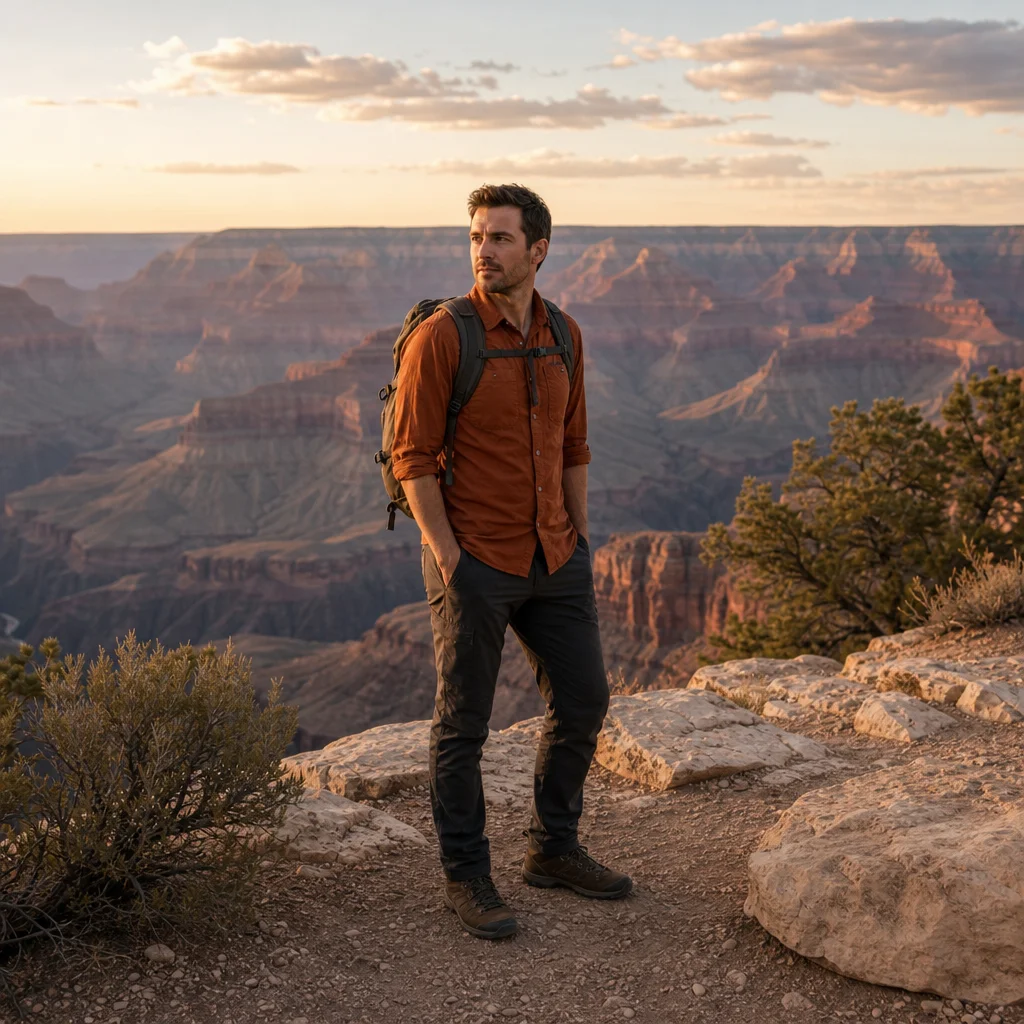
The first climb is where a pace problem usually hides. Your stronger friends move uphill at a speed that feels manageable for a few minutes, so you follow—breathing harder, shortening your breaks, and assuming your body will settle in. Instead, the effort keeps accumulating until the trail steepens or the return trip begins.
Pacing isn’t about proving that you belong in the group. It’s about distributing your available energy across the entire route. You need enough left for the next climb, the changing terrain, and the walk back when your legs are already tired.
Start with the effort you can repeat
Your sustainable pace is the fastest effort you can maintain without repeatedly recovering. On moderate terrain, that usually means you can speak in short sentences without gasping. On a steep or loose section, your speech may become shorter, but your breathing should still feel controlled rather than panicked.
Use that feeling as your starting point instead of trying to copy a friend’s stride. A stronger hiker may be moving at their normal aerobic effort while you’re already close to your limit. The same speed can represent very different costs for different people.
For the first 15 to 20 minutes, deliberately hold back. Take shorter steps, especially on climbs, and keep your upper body relaxed. Avoid surging to close every gap. If the group stops, use the pause to check your breathing and legs rather than treating it as evidence that you should have gone faster.
A pace that feels almost too easy at the beginning is often the pace that lets you finish well. If you reach the first major climb breathing hard and needing a long recovery, the group has already started too quickly for you—or you have matched a speed that isn’t yours.
Make the pace conversation early
Silence creates pressure. If you wait until you’re struggling, your friends may assume you’re fine because you’ve kept moving. Tell the group what you need before the first climb becomes a problem.
Useful wording is specific and easy to act on:
- “I’m going to keep a steady uphill pace rather than match the fastest speed.”
- “Please let me know where the next regroup point is.”
- “I’ll need a short reset before the next long climb.”
- “If I’m behind, keep the trail junction in sight rather than leaving me to guess the route.”
You don’t need to apologize or describe your fitness history. A clear pace request gives the group a way to plan. It also prevents the common mistake of treating every slowdown as an emergency.
Agree on how the group will handle uneven speeds. The fastest hikers can move ahead to a visible landmark, wait at junctions, or regroup at the top of a climb. The exact method depends on the trail, visibility, and navigation demands. On complex routes, nobody should disappear around an unmarked fork simply because they’re walking faster.
If your friends respond with good-natured pressure—“Come on, we’re barely moving”—treat that as information. A group hike only works when the pace accounts for the least experienced or least conditioned person, not when that person spends the day trying to hide their limits.
Let the terrain set the rhythm
A single speed won’t work across a whole trail. Pace by effort and terrain, not by the group’s appearance from a distance.
On sustained climbs
Shorten your stride before you feel desperate. Smaller steps reduce the tendency to surge and make it easier to keep your breathing steady. If the trail allows, use a comfortable switchback rhythm instead of attacking each straight section.
Keep your hands available for balance and avoid leaning heavily on trekking poles. Poles can help with stability and rhythm, but they don’t remove the cost of climbing. If you’re pulling hard on them while your breathing becomes ragged, slow down.
The goal isn't to reach the top without stopping. The goal is to reach it without needing an extended recovery that disrupts the whole group.
On rolling terrain
Don’t spend your energy chasing a friend over every small rise. Let them create space on the uphill and close some of that space on easier ground if you can do so naturally. You may be able to walk faster on level trail, but there’s no benefit in turning every descent into a race.
Watch your footing when tired. A pace that seems efficient can become costly if it causes rushed steps, awkward braking, or repeated stumbles.
On descents
Downhill travel can feel like recovery, but it still loads your legs and may increase fall risk. Keep your steps controlled, particularly on steep, rocky, wet, or loose terrain. Stronger friends may descend quickly because they’re confident with the surface; that doesn’t make their speed appropriate for you.
Tell the group if you need them to wait at the bottom of a technical section rather than at an unseen bend. A visible regroup point is safer and makes the delay predictable.
Check the route before matching the group: Confirm the current forecast, trail conditions, water availability, route restrictions, and planned turnaround point. Snow, heat, mud, wildfire activity, flooding, or a closure can change what counts as a reasonable pace and may make the original plan unsuitable.
Use breaks before you need a long one
Breaks work best when they prevent a large drop in performance. Waiting until you’re dizzy, shaky, nauseated, or unable to speak normally usually means the group has already let the effort run too high.
A short pause can be enough to slow your breathing, drink, adjust a layer, or eat a small amount. Keep the purpose clear: recover enough to continue at a sustainable effort. A long stop after every hard push may feel restful, but repeated surges and collapses are usually more tiring than a slower continuous pace.
Choose breaks at sensible locations: a level area away from the trail, a shaded spot in hot weather, or a protected place out of wind. Don’t stop in the middle of a narrow path or below unstable rock. If the group is moving through exposed terrain, prioritize reaching a safer pause point rather than stopping wherever the fastest hiker happens to pause.
Drink and eat according to the route, conditions, and your own needs. Don’t wait for severe thirst or hunger, but don’t force a large amount at once either. Pack food and water you’ve used successfully before. A group’s snack schedule may not match yours.
Recognize the early signs of overspending
The first warning sign is often a change in control, not pain. You may begin holding your breath on climbs, clenching your shoulders, stumbling over easy ground, or taking irregular steps to keep up. Other signs include irritability, unusual quietness, repeated requests to stop, and difficulty making simple navigation decisions.
Treat these as reasons to reduce effort immediately. Move behind the fastest hikers, shorten your stride, and tell someone what you’re changing. If you wait for a dramatic symptom, you have fewer options and less energy to use them.
Stop and reassess if you develop confusion, faintness, chest pain, severe shortness of breath, loss of coordination, or symptoms that don’t improve after stopping. In hot or cold conditions, unusual weakness, worsening headache, uncontrollable shivering, or behavior changes also deserve prompt attention. The appropriate response depends on the situation: stop the activity, protect the person from the conditions, and use your group’s emergency plan or local emergency services when needed.
These aren’t signs to push through for the sake of a timetable. A friend’s confidence, a summit goal, or an approaching turnaround time doesn’t make a serious symptom less important.
Decide when to separate, turn around, or stop
Sometimes the group’s pace remains incompatible even after you communicate and slow down. Decide in advance what you’ll do rather than negotiating while exhausted.
You might continue separately if the route is straightforward, navigation is reliable, the group has agreed on meeting points, and nobody is left alone in a hazardous setting. You might turn around if you’re falling farther behind, using breaks only to recover enough for another short push, or facing conditions that are worsening faster than expected.
Don't split casually on a route with poor visibility, complex junctions, unstable weather, limited daylight, or unreliable communication. The slowest hiker shouldn’t be abandoned, and the group shouldn’t assume a person who turns back can safely manage every consequence alone.
A useful decision threshold is simple: if maintaining the group’s pace is forcing you into repeated hard surges, your pace is too fast. If slowing down still doesn’t let you recover, the planned route may be too demanding for that day.
A field-ready pacing checklist
Before you start:
- Agree on the route, turnaround time, regroup points, and plan for different speeds.
- Choose a pace you can repeat, not the speed your strongest friend can briefly sustain.
- Carry enough water, food, clothing, and navigation equipment for the route and current conditions.
- Identify a clear way to say you need to slow down or stop.
During the hike:
- Hold back during the opening section, especially on the first climb.
- Use short steps and controlled breathing on steep ground.
- Take brief, purposeful breaks before exhaustion becomes the issue.
- Watch for changes in balance, breathing, coordination, judgment, and mood.
- Regroup at visible, safe locations rather than allowing the group to fragment randomly.
Continue only while you can move with control and recover with reasonable adjustments. If the pace requires repeated surges, your warning signs are worsening, or conditions have changed beyond the original plan, slow the group, turn around, or stop. Finishing together—or making a sound decision not to—matters more than matching someone else’s tempo.