How to Make a Turnaround Decision Before You Feel Stubborn
The hardest part of a hike can be turning around after you’ve invested hours, distance, and effort. I’ll show you how to set clear thresholds for weather, time, energy, navigation, injuries, and trail conditions before stubbornness makes the decision for you.
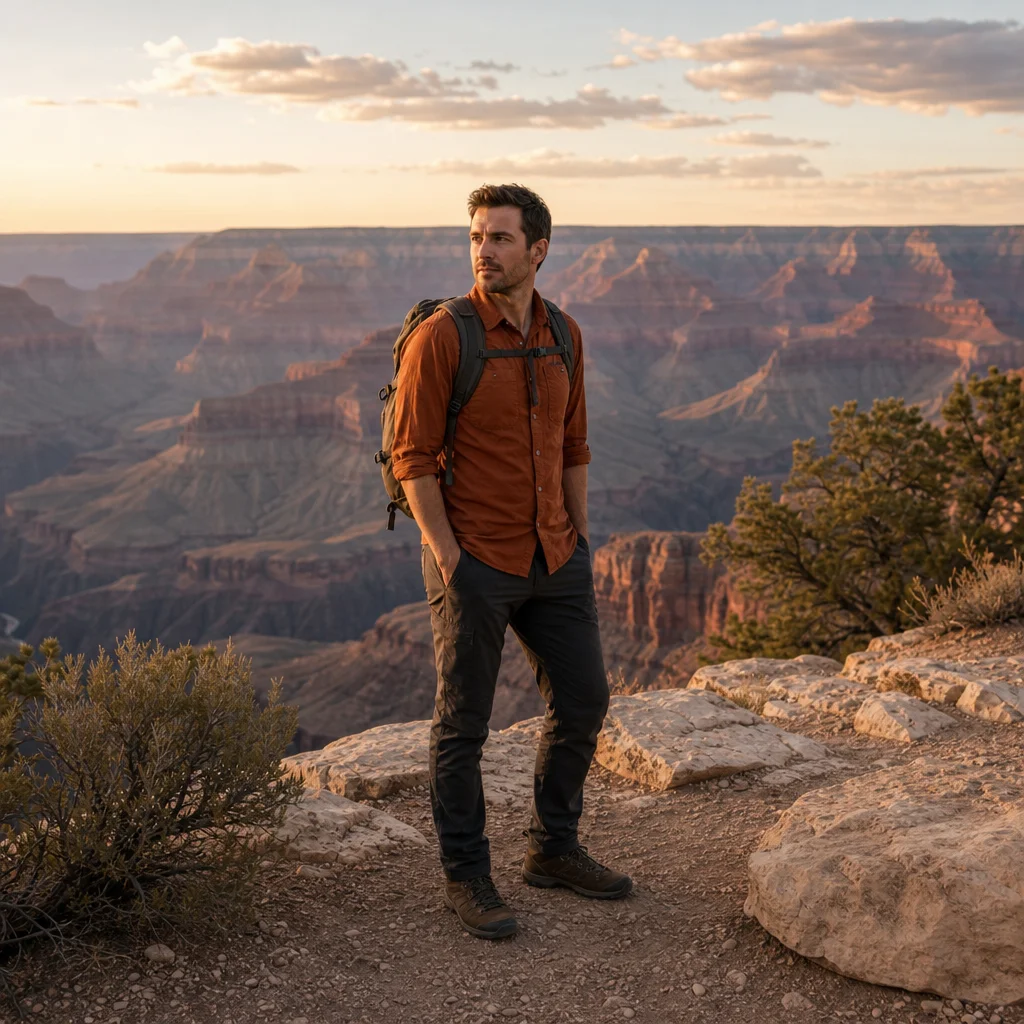
The trail rarely announces the exact moment when continuing stops being sensible. More often, the warning arrives as a small mismatch: daylight is running short, the clouds are building, your route is less certain than it looked on the map, or the return trip suddenly seems harder than the miles already behind you.
That is when a turnaround decision becomes expensive—not because turning back is failure, but because delaying it can consume the resources you need to return safely. A useful system sets the decision before fatigue, disappointment, and the sunk cost of your effort begin arguing against it.
Set the thresholds before you leave
A threshold is a condition that changes your plan. It should be specific enough that you can recognize it while tired and simple enough that you don’t need to negotiate with yourself.
Write down five decisions before the hike:
- Time: What is the latest time you will begin descending or returning, regardless of how close the objective appears?
- Weather: Which forecast changes your route, start time, or destination?
- Energy: What physical signs mean you no longer have a reliable reserve for the return trip?
- Navigation: How much uncertainty is acceptable before you stop advancing?
- Trail conditions: Which changes—ice, water, mud, rockfall, snow, heat, or darkness—make the planned route inappropriate?
You can add an injury threshold and a communication threshold when the route is remote or difficult. The point isn’t to predict every problem. It’s to decide in advance which problems you won’t try to solve while already committed to the route.
Make the thresholds observable. “If I’m getting tired” is difficult to apply. “If I need a rest stop every few minutes on terrain that still requires climbing” is clearer. “If I lose the marked route twice and can’t confirm it on the map” gives you an action instead of a mood.
Check today’s constraints: Before departure, confirm the current forecast, trail or road closures, access rules, daylight, and any route-specific hazards from official or locally authoritative sources. These details can change after a map or guide was published, and safety information should be treated as current only after you verify it for your route and date.
Use a turnaround time, not a summit time
Many hikers set a target arrival time and forget that the return has its own demands. A summit reached late can create a longer, darker, colder, or more technically difficult descent.
Choose a turnaround time by working backward from the conditions you need for the return. Consider:
- How long the descent or return usually takes.
- Extra time for navigation, rest, water, and minor delays.
- The amount of daylight or visibility you need.
- Whether the route becomes more difficult when wet, icy, or dark.
- Your backup plan if the main route is blocked.
If you reach the turnaround time, turn around even when the destination is visible. “Only another half hour” isn't a useful estimate if it ignores the return. On an out-and-back route, every additional minute going farther is also a minute you’ll need to spend coming back, often with less energy.
For a loop, identify the point beyond which the route no longer offers a practical shortcut or exit. That is your commitment point. Before reaching it, a retreat may be straightforward. After reaching it, you may be committed to a longer section in worsening conditions.
Treat weather as a changing condition
A forecast is a planning tool, not a guarantee. Look for the way conditions may affect the route rather than focusing only on whether rain, snow, wind, or heat is present.
Ask:
- Will precipitation make a stream crossing, slab, descent, or unprotected section more difficult?
- Will wind affect balance, loose rock, tree safety, or exposure?
- Will heat increase water needs or slow your pace?
- Will fog, snow, or darkness make route-finding less reliable?
- Is the weather worsening at the same time your route becomes more remote?
Set a response for each concern. For example, a forecast change might mean starting earlier, choosing a shorter route, or turning around at the first sign that visibility is deteriorating. Don’t wait for the worst version of the forecast to appear. A gradual loss of margin is already a reason to change plans.
Watch the ground and sky as you move. Water may rise faster than expected, snow may obscure familiar landmarks, and a dry trail may become slick after a brief shower. Conditions at the trailhead don’t necessarily represent conditions higher up or farther in.
Measure energy by reserve, not effort already spent
The distance behind you isn't a measure of how much capacity remains. You need enough energy for the return, route-finding, and an unexpected delay.
Pay attention to early signs that your reserve is shrinking:
- Your pace has slowed substantially without an obvious terrain change.
- You’re making uncharacteristic navigation or equipment mistakes.
- You’re skipping food or water because stopping feels inconvenient.
- Your footing is becoming careless.
- You’re relying on reaching the destination to justify continuing.
- A normal climb now requires repeated, unusually long recoveries.
Respond early. Eat and drink according to your plan, reduce the objective, or turn around. If a short rest restores your pace and judgment, continue only if you still have a reasonable reserve for the return. A temporary improvement doesn’t erase the time and energy already used.
Your group’s threshold should be set by the least prepared person, the slowest sustainable pace, and the person with the smallest remaining reserve. Splitting up to protect a summit attempt can create more logistical and safety demands than turning around together.
Stop when navigation becomes guesswork
A wrong turn is usually cheaper to correct early. Once you’ve traveled farther on an uncertain route, returning may feel like admitting a mistake, and the extra distance can make the mistake harder to reverse.
Pause when:
- The visible trail no longer matches the map or route description.
- Markers, cairns, or junctions are missing or inconsistent.
- Your location on the map has a wide margin of uncertainty.
- You’re following footprints, social trails, or online directions without confirmation.
- You can’t explain the next section of the route in terms of landmarks, bearings, or map features.
At the first uncertainty, stop moving and reconstruct the last confirmed point. Check the map, terrain, and direction of travel. If you can’t restore confidence without taking a risky shortcut or pushing into unfamiliar terrain, turn around to the last known point or use a confirmed alternate route.
Don't let a phone’s remaining battery become your navigation threshold. Battery, signal, and screen visibility can change. Carry a map and the means to use it, and know how your navigation tools behave before you need them.
Use injuries and trail changes as hard limits
Pain is information, not a test of determination. A minor issue can become a serious problem when you add uneven ground, a long descent, cold, heat, or a pack that must be carried out.
Stop and reassess if pain changes your gait, balance, range of motion, or ability to use equipment. A blister that alters your stride, a knee that feels unstable, or dizziness that returns after rest deserves a plan change. If symptoms are severe, rapidly worsening, or associated with signs of a medical emergency, seek appropriate emergency help rather than continuing toward the objective.
The route itself can also cross a threshold. Turn around when a stream is higher or faster than you can safely assess, a slope is icy beyond your equipment and skill, rockfall has changed the passage, or erosion has removed the usable trail. “Others have crossed” isn't proof that the crossing is suitable for you, your group, or today’s conditions.
A turnaround isn't always a retreat to the trailhead. It may mean returning to the last safe junction, taking a lower route, waiting in a known safe location, or abandoning the planned objective while you still have choices.
Defeat the sunk-cost argument
The thought “we’ve come this far” describes what you’ve already spent. It doesn’t establish that continuing is a good use of the resources you have left.
Replace it with three questions:
- What will the next section cost? Include time, water, daylight, energy, attention, and exposure.
- What resources will remain for the return? Don’t count supplies you may need for an emergency or delay.
- If the condition appeared at the trailhead, would I start? If the honest answer is no, treat that as meaningful evidence.
You can also use a two-person rule: one hiker states the evidence for continuing, and the other states the evidence for turning around. If either person believes a threshold has been met, pause the objective and reassess without debate. This keeps the decision tied to conditions rather than confidence.
Make the decision before the margin disappears
A good turnaround decision preserves options. It leaves you with daylight, energy, water, a navigable route, and enough judgment to handle a delay. Waiting until you feel completely unable to continue is waiting too long.
Before you start, record your turnaround time and the conditions that will trigger it. During the hike, check those conditions at junctions, breaks, major elevation changes, and whenever the weather or trail changes. When one is met, act on the plan instead of reopening the argument.
Your field-ready checklist is simple:
- Turn around by the preset time.
- Turn around when the return no longer fits your daylight or energy reserve.
- Turn around when weather removes a safe margin.
- Turn around when navigation becomes guesswork.
- Turn around when injury changes movement or judgment.
- Turn around when trail conditions exceed your equipment, skill, or ability to assess them.
- Turn around while you still have practical options.
The decision is strongest when it feels slightly early. That is usually the point at which you’re spending resources to preserve safety, not spending safety to protect the objective.