How to Estimate Hiking Time When Elevation Gain Is the Real Difficulty
Steep climbs can turn a short trail into a full-day outing. I’ll show you how to estimate hiking time with a simple climbing adjustment, then refine it for terrain, breaks, pack weight, fitness, and changing conditions.
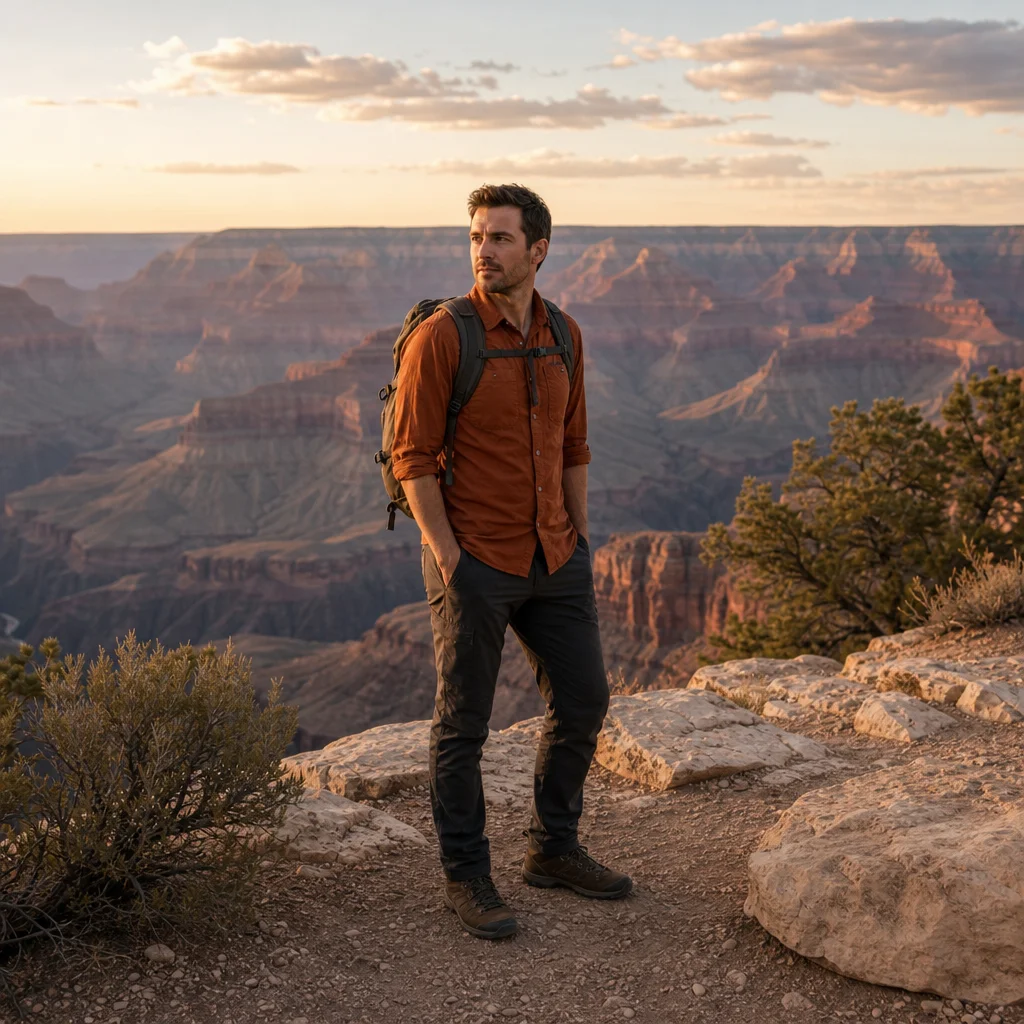
When a route looks modest on the map but climbs steadily from the trailhead, distance stops being a useful time estimate by itself. A five-mile hike with 2,500 feet of gain can demand more time than a longer, flatter route, especially when the trail is loose, wet, hot, or heavily loaded.
A reliable estimate doesn’t require complicated software. You need the route’s distance, total elevation gain, descent, surface, and the conditions you’re likely to encounter. From there, you can build a number that helps you decide when to start, how much daylight to reserve, and whether a shorter alternative makes better use of your available time.
Start with distance, but don’t stop there
Use the trail’s total distance as your first input. A moving pace of 2 to 3 miles per hour is a reasonable starting range for many hikers on maintained, relatively moderate trails, but it isn’t a promise. Your pace may be slower with a heavy pack, frequent navigation checks, deep sand, mud, snow, or a group with varied abilities.
For a first estimate:
Flat or moderate travel time = distance ÷ expected moving speed
For example, six miles at 2.5 miles per hour gives:
6 ÷ 2.5 = 2.4 hours of moving time
That calculation treats the route as if every mile costs the same. Elevation gain is the correction that makes the estimate more realistic.
Add time for climbing
A practical way to account for elevation is to add a climbing allowance to your distance-based estimate. As a starting point, add about 20 to 30 minutes for every 1,000 feet of elevation gain. Use the lower end for a strong hiker on a good trail with a light pack, and the higher end when the climb is sustained, rocky, hot, or unfamiliar.
The calculation looks like this:
Estimated moving time = distance time + climbing time
Suppose a route is six miles long with 2,500 feet of gain. At 2.5 miles per hour, the distance portion is 2.4 hours. Using 25 minutes per 1,000 feet adds about 63 minutes, producing an estimate of roughly 3 hours and 25 minutes of moving time.
That number is a planning baseline, not a finish-time guarantee. Elevation gain is most useful when you also consider how it is distributed. A route that gains 2,500 feet gradually may feel very different from one that gains 1,500 feet in the first two miles and then undulates over the rest of the trail.
Check the climb you’re budgeting for: Confirm the route’s total gain and look at the elevation profile, not just the highest and lowest points. A trail can gain and lose elevation repeatedly, and those smaller climbs still consume time.
Treat descending as work, too
Many estimates account for uphill travel but assume the descent is free. It isn’t. Descending can be quicker on smooth, dry trail, but steep grades, loose rock, roots, snow, and fatigue can reduce your pace or make a careful descent slower than expected.
A useful adjustment is to reduce your expected downhill speed when the descent is technical. You might move efficiently on a gentle trail but need frequent foot placement checks on a steep, uneven section. If your knees, ankles, or balance are limiting factors, plan for the descent to take as long as—or longer than—the climb through similar terrain.
Look at the route in sections rather than relying only on total elevation gain:
- Gentle descent on a good surface: use your normal moving pace or a modestly faster pace.
- Steep, loose, or rocky descent: use your uphill-adjusted pace as a starting point.
- Long descent late in the day: reduce the estimate because fatigue and reduced attention can slow you down.
- Repeated ups and downs: count the smaller climbs instead of focusing only on the route’s highest point.
If a trail gains 2,000 feet but also includes several steep drops and climbs, the total ascent shown by a detailed route profile may be much higher than the simple difference between the trailhead and summit.
Adjust for the surface and route shape
Terrain can matter as much as elevation. Two trails with the same mileage and gain can produce very different times.
Increase your estimate when the route includes:
- Loose scree, sand, mud, or deep gravel
- Roots, rock steps, talus, or frequent scrambling
- Narrow tread with exposure that requires careful movement
- Dense vegetation or poorly defined sections
- Stream crossings or obstacles that require waiting or route-finding
- Snow, ice, or seasonal debris
A smooth, engineered trail allows a more consistent pace. An uneven trail repeatedly interrupts your stride, even when the grade is moderate. Rather than adding a large blanket of time to the whole hike, identify the difficult sections and estimate them separately.
For instance, you might use your normal pace for the first three miles, add a climbing allowance for a steep two-mile ascent, and then assign a slower pace to a rocky descent. Section-by-section planning takes a few more minutes, but it can prevent the expensive mistake of building a day around an optimistic average.
Add breaks separately from moving time
Moving time and elapsed time are different numbers. Moving time is how long your feet are progressing along the trail. Elapsed time includes water stops, snacks, navigation checks, clothing changes, photos, gear repairs, and longer rests.
For a short outing, you may add 10 to 15 minutes per hour of moving time. For a long hike or a social group, 15 to 30 minutes per hour may be more realistic. Add known stops directly when you can:
Total outing time = moving time + planned breaks + likely delays
This separation helps you make efficient decisions. If you need to shorten the day, you can see whether the time is being spent on distance, climbing, or stops. You may be able to reduce unnecessary delays, but you shouldn’t plan to remove every rest or water break just to preserve an ambitious finish time.
Build in time for the decisions that keep the hike orderly: checking the map at junctions, confirming that everyone is together, and pausing before a complicated descent. These aren’t wasted minutes. They’re part of the cost of moving through unfamiliar terrain responsibly.
Account for the people and the pack
Use the slowest consistent pace in a group, not the fastest individual’s pace. A group’s estimate should include regrouping, communication, and the time needed for less experienced hikers to negotiate steep or uneven ground.
Pack weight also changes the estimate. A light daypack may have little effect on a familiar trail, while overnight gear, extra water, winter layers, or technical equipment can make climbs and descents noticeably slower. Don’t apply a precise percentage unless you have data from your own hikes. Instead, compare the planned load with a recent outing on similar terrain and add a conservative margin.
Fitness matters, but it’s best expressed through observed performance rather than labels. If you know you typically cover a particular amount of gain in an hour on similar trails, use that record. If you’re estimating for a first hike, choose the slower end of the range and treat any faster result as useful information for future planning.
Use a range, not a single finish time
A single number creates false precision. Give yourself a likely range and a slower-but-plausible time.
For example:
- Likely moving time: 3 hours 25 minutes
- Likely elapsed time with breaks: about 4 hours
- Slower scenario: 4.5 to 5 hours if the surface, weather, or group pace deteriorates
The slower scenario is especially important when the route has a fixed deadline, limited daylight, difficult navigation, or a long drive afterward. If the slow estimate exceeds your available time, choose a shorter route or start earlier rather than hoping conditions will cooperate.
You can also estimate each direction independently. A summit hike may take 3 hours up and 2 hours down, but a steep, technical descent could make it 3 hours in each direction. Out-and-back routes are rarely exact mirror images.
Recalculate when conditions change
Your original estimate is based on expected conditions. Update it when the trail tells you that the assumptions were wrong.
Slow down and recalculate if you encounter:
- A sustained grade steeper than the map suggested
- Poor visibility or navigation uncertainty
- Heat, cold, wind, or precipitation affecting movement
- Snow or ice covering the trail
- More water crossings or obstacles than expected
- A group member tiring faster than planned
- A departure delay that reduces your daylight margin
Use a known trail segment as a measuring stick. If a two-mile section with moderate climbing takes you 90 minutes instead of the planned 60, don’t simply try to make up the difference later. Apply the observed pace to the remaining terrain, then decide whether to continue, turn around, or use a bailout route.
Verify your return margin: Before committing to a climb, compare the slower estimate with remaining daylight, transportation timing, weather changes, and the group’s energy. If the margin disappears, turn around while the decision is still easy.
A compact method for the trailhead
Before leaving, write down four numbers:
- Distance time: distance divided by a realistic moving speed.
- Climbing time: an added allowance based on total gain and how sustained the grades are.
- Descent and terrain adjustment: extra time for technical, loose, wet, snowy, or repetitive terrain.
- Break and delay allowance: planned stops plus time for navigation and regrouping.
Then calculate both directions and add a slower scenario. Your estimate might look like this:
6 miles at 2.5 mph                  2 hr 24 min
2,500 feet of climbing               1 hr 03 min
Technical descent adjustment          0 hr 20 min
Breaks and navigation                 0 hr 35 min
Estimated elapsed time                4 hr 22 min
Slower-condition planning range       5 hr or more
The exact allowances will improve as you keep notes from comparable hikes. Record distance, gain, moving time, elapsed time, pack weight, surface, and weather. After several outings, your own data will be more useful than a universal rule of thumb.
Field-ready decision threshold
Go with the plan when your slower estimate still leaves a comfortable margin for daylight, weather, navigation, and the group’s ability. Adjust the route when the likely estimate consumes nearly all of that margin. Turn around when your observed pace, worsening conditions, or remaining daylight makes the original finish plan depend on moving faster than is reasonable.
Before you start, confirm:
- Distance and total elevation gain
- Where the major climbs and descents occur
- Surface and seasonal hazards
- Realistic group pace and pack weight
- Planned breaks and likely delays
- A slower-condition finish time
- Your turnaround time and exit option
Distance tells you how far you’ll travel. Elevation, terrain, and conditions tell you what that distance will cost.