A First Hike on Rocky Desert Terrain: What to Watch Before You Start
I’ll help you assess heat, footing, shade, water, and route-finding demands before choosing a beginner-friendly rocky desert hike, so you can make a calm go-or-no-go decision with the conditions—not the trail name—guiding your plans.
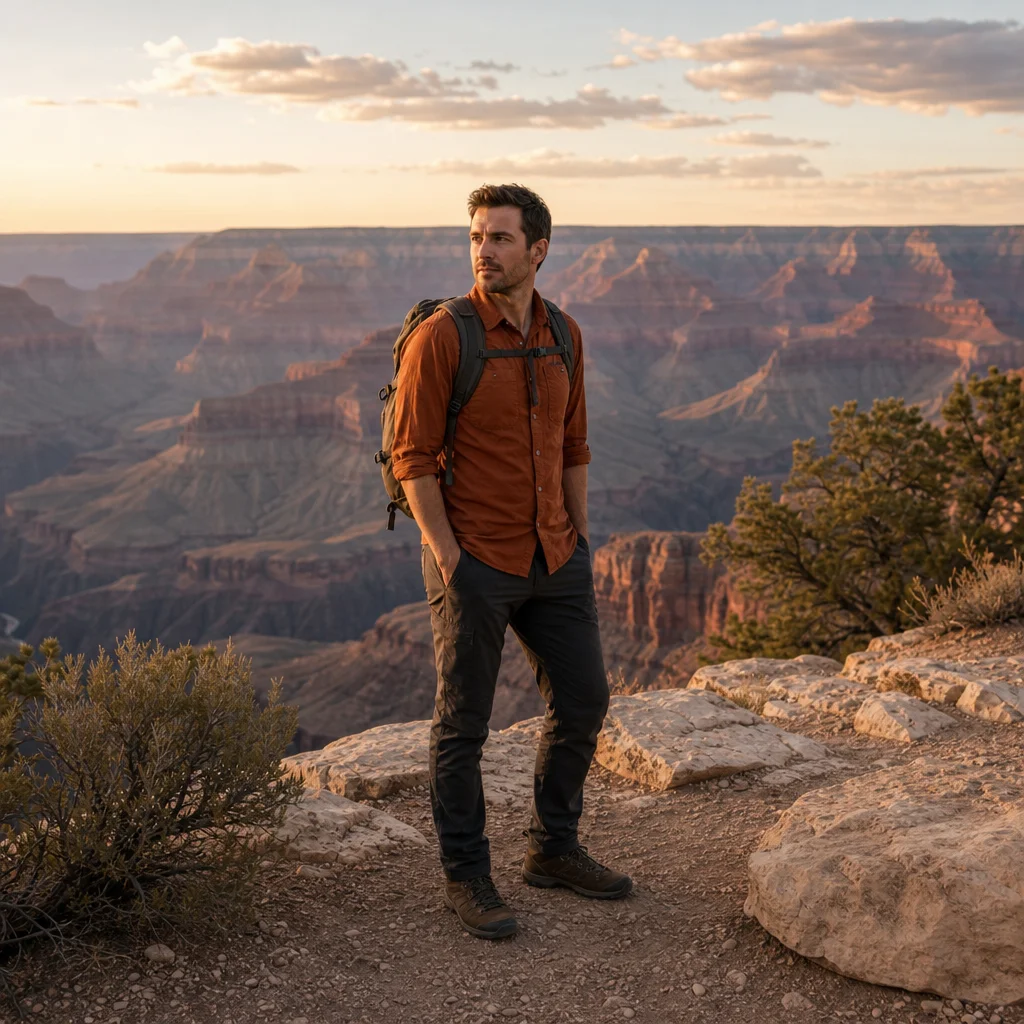
Rocky desert trails can look short and manageable from the trailhead, yet the first few minutes often reveal the real difficulty. Loose stones change how you walk, dark rock absorbs heat, shade may be scarce, and a route that seems obvious from a map can divide around washes, cliffs, or low ridges.
Before you start, make a decision based on the conditions you can observe—not only on mileage or elevation gain. A beginner-friendly outing should leave room to slow down, turn around, and handle a wrong turn without exhausting your water or daylight.
Start with the conditions, not the distance
A short desert hike can be demanding when the sun is strong, the surface is uneven, or the route offers little protection. Look at the entire outing as a combination of exposure, footing, navigation, and recovery options.
Ask these questions before leaving the trailhead:
- How much time will you spend in direct sun?
- Is there reliable shade along the route, or only a few small patches near rock walls or vegetation?
- Does the trail cross loose gravel, tilted slabs, boulder steps, or a sandy wash?
- Can you identify the route back from the first major bend or junction?
- How much water will each person carry, and what is your plan if the hike takes longer than expected?
- What is your turnaround point if the heat, footing, or navigation becomes uncomfortable?
These questions matter more than whether a route is labeled “easy.” Trail ratings vary by park, guidebook, and contributor. Treat the rating as a starting point, then compare it with the current weather, route description, and your group’s ability to move steadily over uneven ground.
Confirm the day’s limits: Check the current forecast, trail or park notices, access conditions, and any water restrictions before you drive to the trailhead. Desert heat, closures, fire conditions, and road access can change the suitability of an otherwise simple hike.
Read heat before you leave the car
Heat stress begins with the combination of air temperature, radiant sun, exertion, clothing, and limited water—not with a particular number on a thermometer. Rocky surfaces can feel hotter than the surrounding air, and a calm day may offer little relief when you’re walking in full sun.
For a first outing, favor the cooler part of the day when local conditions allow. An early start can reduce direct heat, but it doesn’t remove every risk: darkness complicates footing and navigation, and some desert roads or trailheads may have limited access hours. Confirm the local rules and sunrise conditions rather than assuming an early departure is permitted or practical.
At the trailhead, notice how your body responds while organizing your pack. If you’re already unusually thirsty, lightheaded, weak, or nauseated, don’t treat the hike as a test of determination. Cool down, drink appropriately, and reconsider the plan. Symptoms that worsen or include confusion, fainting, or loss of coordination require urgent attention; get emergency help according to the area’s communication and rescue options.
Once moving, use a deliberately easy pace for the first section. You should be able to speak in complete sentences without feeling that you’re spending your reserves. Take brief, regular breaks before you feel depleted. A long stop in direct sun may be less useful than a shorter pause in whatever shade is available, but don’t depend on finding shade later unless the route description specifically identifies it.
Inspect your footing on the first rocky section
Rocky desert terrain asks for more attention than a smooth path. The surface may include stable bedrock, loose pebbles, sharp edges, sand over rock, and polished sections where repeated foot traffic has reduced traction. These features can appear within a few steps of one another.
Use the opening stretch as a footing test. Notice whether you can:
- Place your whole foot securely instead of landing on the edge of a stone
- Keep your ankles level on angled ground
- Descend a short step without jumping or twisting
- Maintain balance while looking several steps ahead
- Stop comfortably without sliding on loose material
Shorten your stride and keep your knees relaxed. On a descent, resist the temptation to hurry; loose rock is often more troublesome going down because your weight shifts forward and your braking muscles work harder. Use your hands for balance on stable rock when needed, but inspect a handhold before relying on it. Desert rock can be sharp, loose, or hot enough to damage bare skin.
Shoes with a secure fit and a sole suited to uneven ground are more useful than footwear chosen only for lightness. Trekking poles can help with balance on loose approaches and descents, but they won’t make a steep or exposed route appropriate for a first hike. If you’re constantly watching your feet and still feeling unstable, the terrain may be beyond your current comfort level.
Find shade, water, and recovery points
Shade is a planning feature, not a guarantee. A route description may mention a canyon, overhang, or grove, but the usable shade could be small, seasonal, or available only at certain times of day. Don’t count on a tree or rock wall to provide enough protection for your entire group.
Before starting, identify likely rest points on the map and then compare them with what you can see from the trailhead. If the hike begins across an open slope and the first shaded area is far away, plan to reach it without overexerting yourself. Keep your pace low enough that the shade is a benefit rather than a rescue target.
Carry more water than the exact walking time seems to require, because navigation errors, heat, slower footing, and helping someone else all extend the outing. The right amount depends on the season, temperature, distance, pace, and individual needs. Don’t assume a desert spring, faucet, or creek is present, safe to drink, or operating unless current local information confirms it and you have a suitable treatment plan.
Water is only one part of preparation. Bring food for an outing that runs long, sun protection that you’ll actually use, a basic first-aid kit, and a charged phone. A hat, sunglasses, and clothing that covers exposed skin can reduce the effect of direct sun. Keep the emergency items accessible rather than buried under spare layers.
Test your route-finding early
Desert trails often fade across rock, split around vegetation, or follow a wash before rejoining a more obvious path. Cairns may be unofficial, moved, or hard to distinguish from ordinary piles of stones. A visible path in front of you isn't automatically the correct path back.
Before you walk, examine the route as a sequence of recognizable features: a trailhead, junction, wash crossing, rock formation, ridge, or change in surface. Note the direction of travel and what the return view should look like. If you’re using a phone map, download the relevant map area when possible, conserve battery, and understand how to orient yourself before losing service.
At every junction or uncertain section, stop rather than drifting forward. Compare the map, terrain, and route description. Look behind you and identify the return line. If the landscape has several similar gullies or rock walls, take a mental or written note of the correct one.
A wrong turn is easiest to correct while you still recognize where you left the route. If you can’t confirm your position, retrace your steps to the last known point instead of continuing in the hope that the trail will become obvious. Don’t split up to search for the route unless your group has a clear communication and safety plan.
Check the route before committing: Verify the current map, junctions, access points, and any route-specific navigation warnings. If you can’t explain how you’ll recognize the return path, choose a shorter route with clearer landmarks or postpone the hike.
Decide what changing conditions mean
Good decisions are made before discomfort becomes an emergency. Set simple thresholds while you’re still at the trailhead:
- Turn around if heat feels substantially stronger than expected and you can’t maintain an easy pace.
- Turn around if footing requires repeated slips, awkward climbing, or more exposure than you planned to manage.
- Turn around if the route becomes unclear and you can’t confirm your location.
- Turn around if water is being consumed faster than expected or a group member shows concerning symptoms.
- Leave exposed terrain if thunderstorms, strong winds, dust, or rapidly changing weather create a hazard.
Weather in the desert can change the route itself. Rain may make washes dangerous, muddy, or impassable, while wind can reduce visibility with blowing dust and make exposed rock less secure. Lightning and storms require particular caution around ridges, isolated high points, and open ground. Don’t enter a drainage because it looks dry if rain is occurring upstream or storms are building nearby.
Pay attention to the quiet signs of a worsening plan: your breaks are getting longer, conversation has stopped, people are stumbling, or you’re rationing water earlier than expected. Those are decision points, not failures. A successful first hike ends with enough energy to return safely and learn what to adjust next time.
A field-ready go-or-no-go check
Before stepping onto a rocky desert trail, confirm that you have:
- A route suited to your group’s current footing and navigation skills
- A weather and access check for the day and the specific area
- More water and food than the shortest expected outing requires
- Sun protection, appropriate footwear, a charged phone, and basic first aid
- A clear first turnaround point and a plan for getting back
- Enough daylight and energy for the return, not just the outward walk
- Agreement that anyone can call for a pause or turnaround without debate
Go when the route is understandable, the weather is within your group’s limits, and you can move over the opening terrain with control. Choose a different trail or return to the trailhead when heat, footing, water, or navigation falls outside those limits. On rocky desert terrain, the best preparation isn't predicting every problem; it’s recognizing the early signs that tell you when to change the plan.